Pierre Auguste Renoir
 France
- Biography of Pierre-Auguste Renoir
- Working under Open Skies
- The Vitality of Renoir's Art
- A Fusion of Genres
- Recognition and Legacy
Biography of Pierre-Auguste Renoir
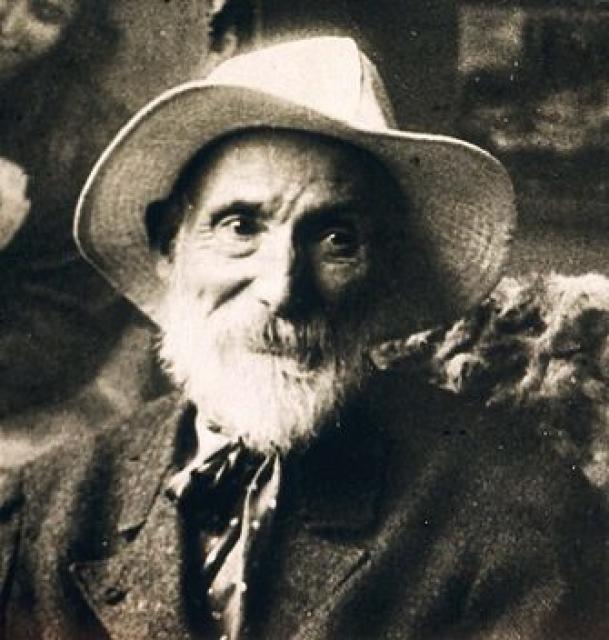
Pierre-Auguste Renoir was a French painter, printmaker, and sculptor, known for being one of the leading figures of the Impressionist movement. He continued to work prolifically until old age, with his numerous "Nudes" becoming an anthem to life and youth, a theme he passionately depicted as long as he held a brush. Renoir was born in Limoges and moved to Paris with his parents when he was four years old. Coming from a poor family, he had to start earning a living from a young age. He initially painted porcelain cups by hand, until the introduction of mechanization rendered this job obsolete. He then took up a job painting religious scenes in a workshop that supplied church-themed curtains to missionaries working in Africa. It was there that Renoir managed to save up enough money to quit his side job and fully dedicate himself to learning art. He enrolled in the atelier of Charles Gleyre, where he met artists such as Claude Monet, Frédéric Bazille, and Alfred Sisley. This small group of artists went on to lead the new artistic endeavors of Impressionism.
Working under Open Skies
Together with Claude Monet, Renoir painted small studies that they would finish directly outdoors. Their favorite spot was a place called "La Grenouillère" on the Seine River, near Paris, where public baths and restaurants were located. It was a place frequented by a mixed crowd, with a festive atmosphere always prevailing. These young artists captured the carefree leisure activities by the river in their paintings. One such painting is "Bathers on the Seine" (1869), which is now housed in the Pushkin Museum of Fine Arts in Moscow. The vibrant clothing of the Parisians, the greenery of the trees, and the reflections of sunlight on the water all come together harmoniously, creating a lively symphony of movement and light. When the Franco-Prussian War broke out, Renoir was called to serve in the army and served in the cavalry regiment in Bordeaux. His commanding officer, impressed by his joyful nature, suggested that he pursue a military career. "What if I had pursued all the professions that tempted me!" exclaimed Renoir in his old age, while conversing with the young art dealer Vollard. "I've already told you that in my youth, Gounod - my solfeggio teacher at the communal school where I studied - insisted that my parents enroll me in singing lessons."
The Vitality of Renoir's Art
Renoir's powerful vitality, joyful perception of the world, innate talents, and quick reactions made him gifted in many areas, but he invested all his soul into painting. Therefore, his paintings stand out among those of other Impressionist artists with their particular warmth that seems to emanate from the colors. They convey the pulse of life while showcasing the artist's free and expressive brushwork. In the 1870s, Renoir created paintings that have since become classics of French Impressionist art. Among them is "The Nude" (Moscow, Pushkin Museum of Fine Arts), for which the model was Anna, a professional nude model. Originally titled "Study," this work was exhibited at the Second Impressionist Exhibition in 1876. In the 19th century, artists typically depicted nude figures in mythological or historical contexts, treating nudity as a symbol of the subject matter. The naked body was portrayed impersonally, conveying idealized forms but not human individuality. In "The Nude," however, Renoir combines the genres of nude and portrait. The young woman's face is depicted with individuality, showcasing a confident and blossoming Parisian. Her nudity does not faze her; she sits calmly, half-turned towards the viewer. Her figure may be slightly voluptuous and heavy, but it exudes the beauty of mature femininity. Renoir admires the softly rounded forms and captures the cool shadows gliding across her hips and back, emphasizing the vibrant sensuality of the body.
A Fusion of Genres
Renoir often combines various genres in his paintings. He enjoys depicting his friends and their girlfriends under the shade of trees, with sunlight illuminating the scene, blending portraiture, genre scenes, and landscape elements. In the painting "The Swing" (1876, Paris, Louvre), he portrays a corner of one of the Parisian gardens. A young girl in a pink dress adorned with numerous bows flirts with two young men wearing straw hats, as she stands on a swing hanging from a tree. This motif of balancing equilibrium, of dynamic stillness, can be considered a metaphor for Impressionistic painting as a whole. After all, the essence of Impressionism lies in capturing the ever-changing, in movement, while the Impressionist artist always seizes a moment of specific static balance and harmony of forms. Renoir's "The Swing" is filled with the play of sunlight, filtering through the lacy foliage, as if hopping from place to place. Air and light blend seamlessly, enveloping the characters of the painting in a soft, flowing atmosphere. Renoir loves to depict people engaged in casual conversations, social chit-chat, light flirting, sitting with flowers, with a book, or with a glass of wine somewhere along the riverbank or in a gazebo entwined with greenery. Kittens, small dogs, and children are constant participants in his paintings, bringing a sense of tenderness and playfulness. Renoir had no interest in preaching like Courbet or satirizing like Daumier. In his youth, he imitated Orientalist scenes by Delacroix, but he was attracted to their vividness rather than their exoticism. He was the first to discover the pictorial qualities, distinct character, and expressiveness of pose and types in contemporary life. His fellow Impressionist, Edgar Degas, was also an observer of Parisian types and customs, but his range of impressions was much narrower, and his view of life was tinged with melancholy and irony. Renoir, on the other hand, did not want to notice the sad aspects of life; perhaps they were too familiar to him during his impoverished youth.
Recognition and Legacy
In 1881, Renoir painted a large-scale canvas titled "Luncheon of the Boating Party" (Washington, Phillips Collection). Once again, he captured an atmosphere of conviviality, youth, and mirth. On the left side of the painting, Renoir depicted a young girl wearing a hat adorned with flowers. She is playing with a dog that she has placed directly on the table. This girl would later become the artist's wife. Renoir gained recognition, partly due to his ability to paint portraits. Several family portraits, executed by him and prominently displayed in affluent homes, brought him more fame than his participation in numerous Impressionist exhibitions, during which critics hurled mockery at the artists. Renoir did not flatter his models; he simply looked at them with the same joy and cheerfulness that he looked at everything around him. As a result, people in his portraits always appeared happy and beautiful. Renoir continued to work productively until old age. His numerous "Nudes," for which maids living in his house posed, became an ode to life and youth that the artist never ceased to sing, as long as he still held a brush. He passed away in 1919.