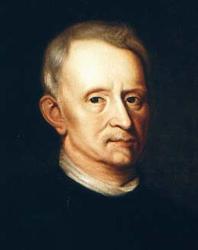
Pierre-Henri Hugonio
 France
- Henri Hugoniot
- Early Life and Education
- Career in the Navy and Academia
- Scientific Work
- Collaboration with Hippolyte Sebert
- Legacy
Henri Hugoniot
Henri Hugoniot (1851-1884) was a French mathematician and physicist who made significant contributions to the field of gas dynamics.
Early Life and Education
Hugoniot was born in 1851 in Saint-Brieuc, France, to a metalworker father and a homemaker mother. He excelled in his studies, becoming the top student at the École normale supérieure in 1870. However, he chose to attend the École Polytechnique, where he graduated in 1872.
Career in the Navy and Academia
After graduating, Hugoniot served in the naval artillery, where he rose through the ranks to become a captain by 1884. In addition to his role in the artillery school, he also worked as the assistant director of the Central Laboratory of Naval Artillery. In 1884, he became an associate professor of mechanics at the École Polytechnique in Paris.
Scientific Work
Hugoniot's main scientific contributions lie in the field of gas dynamics. He is considered one of the founders of the field, alongside Christian Doppler, Bernhard Riemann, Ernst Mach, and William John Macquorn Rankine. Hugoniot's most notable work was the derivation of the jump conditions, or Hugoniot relations, which relate the changes in physical quantities across a shock wave.
Collaboration with Hippolyte Sebert
In collaboration with his colleague Hippolyte Sebert, Hugoniot studied the expansion of gases in artillery fire. Their research led to the development of the Hugoniot-Rankine equation, which describes the shock wave. This equation was published posthumously in the "École Polytechnique" journal.
Legacy
Hugoniot's ideas were further developed by French scientists Jean Croussard and Edouard Jouguet. Jouguet's work, "Mécanique des Explosifs" (1917), became a seminal text in the field of explosives. In catastrophe theory, the saddle-node bifurcation is often referred to as the Riemann-Hugoniot catastrophe.