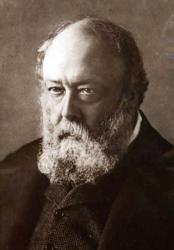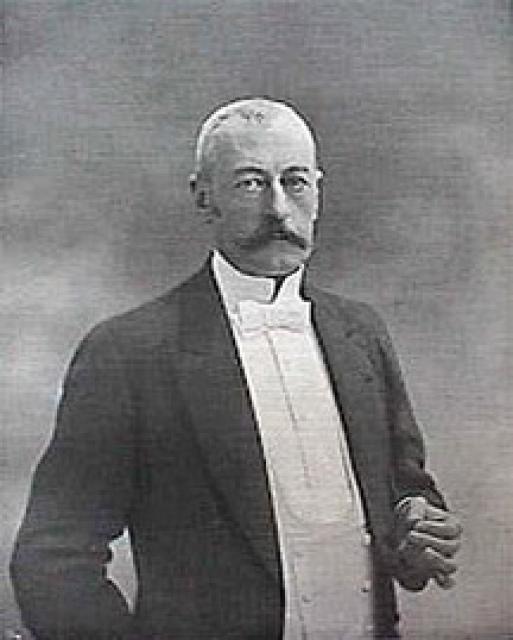
Pierre Waldeck-Rousseau
 France
- Pierre Waldeck-Rousseau: A Statesman of the Third Republic
- Political Career: First Stage
- Interlude from Politics
- Political Career: Second Stage
- Prime Minister and the Waldeck-Rousseau Government
- The government pursued a wide-ranging agenda, including:
- - Laicization of the state, including the 1901 Associations Law.
- - Economic policies aimed at balancing the budget.
- - Strengthening of the Franco-Russian alliance.
Pierre Waldeck-Rousseau: A Statesman of the Third Republic
Early Life and EducationPierre Waldeck-Rousseau was born in Nantes, France, on December 29, 1846. His father, who had been a member of the National Assembly, played a significant role in the establishment of the Second Republic in 1848.
After completing his legal studies at the University of Poitiers, Waldeck-Rousseau pursued a career as a lawyer in Rennes.
Political Career: First Stage
In 1879, Waldeck-Rousseau was elected to the Chamber of Deputies representing Ille-et-Vilaine. He quickly gained attention for his proposals to reform the judiciary, particularly his opposition to the irremovability of judges.
He held the position of Minister of the Interior in the Gambetta and Ferry cabinets from 1881 to 1885. During his tenure, he introduced the "Waldeck-Rousseau Law," which legalized trade unions and repealed the restrictive "Le Chapelier Law."
Interlude from Politics
In 1889, Waldeck-Rousseau stepped down from political life and returned to practicing law. He represented famous clients, including engineer Gustave Eiffel. In 1897, he exposed the notorious "Crawford Inheritance" scandal, which involved fraudulent claims of inheritance.
Political Career: Second Stage
In 1894, Waldeck-Rousseau returned to politics and was elected to the Senate. He founded the "Grand Républicain Cercle" in 1898, an organization aimed at uniting progressive Republicans.
During the Dreyfus Affair, Waldeck-Rousseau became a vocal advocate for Dreyfus's innocence. When the Dupuy government sought to limit the powers of the Court of Cassation's criminal division in an attempt to suppress Dreyfus's case, Waldeck-Rousseau strongly opposed it.
Prime Minister and the Waldeck-Rousseau Government
In 1899, after the fall of the Dupuy government, Waldeck-Rousseau was appointed Prime Minister. He simultaneously held the portfolios of Minister of the Interior and Minister of Religious Affairs.
Waldeck-Rousseau's cabinet was a diverse coalition that included both socialists and conservatives. Despite its heterogeneity, it proved to be surprisingly durable, lasting for three years, the longest of any government during the Third Republic.
The government pursued a wide-ranging agenda, including:
- "Purification" of the administration and army, dismissing corrupt or undesirable officials.
- Resolution of the Dreyfus Affair and prosecution of nationalist agitators.
- Laicization of the state, including the 1901 Associations Law.
- Introduction of social legislation, such as laws on women's and children's labor and the 11-hour workday.
- Economic policies aimed at balancing the budget.
- The creation of the Banque Agricole and Agricultural Information Authority.
- Strengthening of the Franco-Russian alliance.
Later Career and LegacyIn 1902, Waldeck-Rousseau oversaw the passage of an educational reform that modernized secondary education. He also initiated a secret agreement with Italy and expanded French colonial territories in Sudan.
He led the Left Bloc to victory in the 1902 legislative elections but resigned as Prime Minister due to pancreatic cancer. He continued to serve in the Senate until his death in 1904.
Waldeck-Rousseau's legacy as a statesman of the Third Republic is marked by his progressive policies, his ability to bridge political divides, and his unwavering commitment to justice and democracy. A French Navy cruiser was named in his honor, and he is buried in the Montmartre Cemetery in Paris.