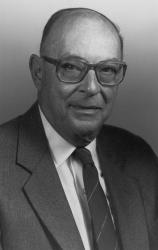
Valter Shottki
 Germany
Biography of Walter Schottky
Early Life and EducationWalter Schottky was a German physicist born in Zurich, Switzerland. He studied at the Berlin University, where he earned his doctorate in philosophy in 1912.
Discoveries and Contributions
In 1913-1914, Schottky discovered the phenomenon of saturation current increase under the influence of an external accelerating electric field, known as the Schottky effect. He also developed the theory behind this effect. In 1915, he invented the electron tube with a screen grid.
During the years 1916-1919, Schottky worked at the Siemens and Halske laboratory. In 1918, he proposed the superheterodyne principle of amplification. From 1920-1923, he lectured at the University of Wurzburg, and from 1923-1927, he became a professor at the University of Rostock. In 1927, he returned to the Siemens and Halske laboratory.
In 1930, Schottky investigated the empty nodes of the crystal lattice, uncompensated by atoms in the interstitial spaces, known as "Schottky defects." In 1939, he studied the potential barrier that arises in the contact layer between a semiconductor and a metal. He then developed the theory of semiconductor diodes with such barriers, which are now known as Schottky diodes or Schottky barrier diodes. Schottky also proposed the mechanism of conductivity in semiconductors.
Contributions to Physics
Walter Schottky made significant contributions to the study of processes occurring in electronic tubes and semiconductors. His research spanned various fields, including solid-state physics, thermodynamics, statistics, electronics, and semiconductor physics.