Praxedes Mateo Sagasta
 Spain
Spain- Early Life and Career
- Political Involvement and Exile
- Change and Betrayal
- Ministerial Roles and Coup d'État
- Opposition and Coup
- Mobilization and Defeat
- Dynastic Liberalism and Restoration
- Prime Minister (1881-90, 1892-95, 1897-98)
- Spanish-American War and Downfall
- Later Years and Death
Early Life and Career
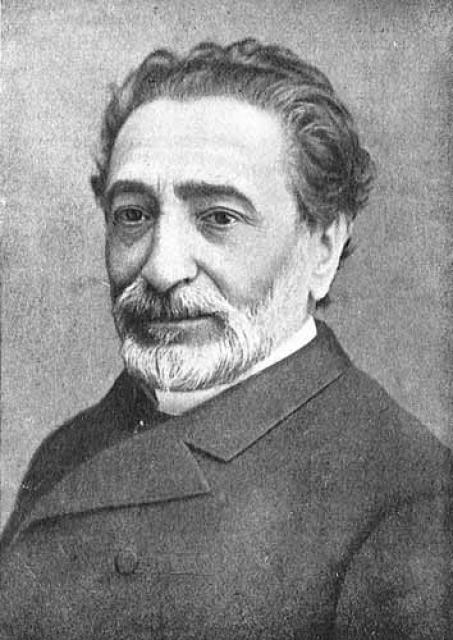
Praxedes Mateo Sagasta, a prominent Spanish statesman, was born in Torrecilla en Cameros. He pursued engineering studies and worked as an engineer in the construction of a railway.
Political Involvement and Exile
Sagasta actively participated in the insurrection of 1854, earning him a seat in the Spanish parliament (Cortes). Following the suppression of the revolutionary movement in 1856, he was forced to flee abroad. Upon his amnesty, he returned to Madrid and became a professor at the School of Engineering, a liberal deputy in the Cortes, and editor of the newspaper "Iberia."
Change and Betrayal
After an unsuccessful revolt in 1866, Sagasta fled again, returning after the downfall of Queen Isabella. He was appointed Minister of Interior and later Minister of Foreign Affairs. He maintained close alliances with General Prim and later with Marshal Serrano, though he was known for his willingness to shift political allegiances and betray former associates.
Ministerial Roles and Coup d'État
On January 5, 1871, Sagasta became Minister of Interior in Serrano's conservative-liberal government. He resigned on July 20 when Serrano was forced to dissolve his cabinet in favor of Zorilla's radical administration. Elected President of the Cortes against the government's candidate, Sagasta's influence contributed to Zorilla's downfall. He subsequently held the portfolio of Interior in Malcampo's cabinet and became Prime Minister on December 20. However, his government collapsed on May 22, 1872, due to financial irregularities and the King's displeasure over Sagasta's secret dealings with supporters of the pretender Alfonso.
Opposition and Coup
Disfavored by both the King and republicans, Sagasta found himself in opposition, aligning with neither side. In late 1873, he joined a conspiracy against Castelar, led by Marshal Serrano and General Pavia. When Pavia's coup d'état dispersed the Cortes on January 3, 1874, Sagasta became Minister of Foreign Affairs and later Minister of Interior in Serrano's government. He became Prime Minister on September 4, when Serrano joined the army.
Mobilization and Defeat
During this tumultuous period, Sagasta organized and armed urban mobs to confront political opponents. Despite these measures, he faced a pronunciamiento on December 30, which favored Alfonso over himself and Serrano. Sagasta conceded to the rebellion, deeming resistance too risky.
Dynastic Liberalism and Restoration
Subsequently, he led a moderate, dynastic-liberal opposition in the Cortes. He actively sought the favor of King Alfonso XII and eventually succeeded. After Cánovas del Castillo's government fell in 1881, the King turned to Sagasta.
Prime Minister (1881-90, 1892-95, 1897-98)
Sagasta's terms as Prime Minister brought about the abolition of slavery in Cuba, expanded the jurisdiction of trial by jury, implemented civil marriage, and introduced universal suffrage. However, electoral irregularities remained prevalent. His repressive policies towards the Cuban independence movement sparked a rebellion, which he failed to quell.
Spanish-American War and Downfall
Sagasta initiated the Spanish-American War without adequately preparing the army. The war ended in a catastrophic defeat for Spain, resulting in widespread public outrage against Sagasta. After surviving a prolonged political crisis, his government finally fell in 1899.
Later Years and Death
Sagasta returned as Prime Minister from 1901 to 1902. His administration faced numerous strikes and unrest, which he suppressed forcefully. He died in Madrid in 1903, leaving a legacy of political opportunism, shifts in allegiance, and a controversial role in Spain's colonial conflicts.