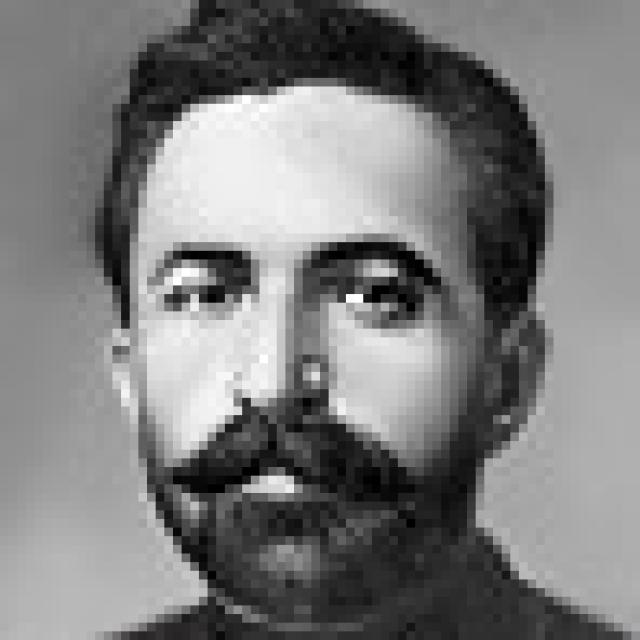
Prokofiy Djaparidze
 Azerbaijan
- Biography of Prokofy Dzhaparidze
- Early Activism
- Revolutionary Work
- Newspaper and Journal Publications
- Imprisonment and Exile
- Baku Revolutionary Activities
- Role in the Soviet Government
Biography of Prokofy Dzhaparidze
Prokofy Aprasionovich Dzhaparidze, also known by his party pseudonym Alyosha, was born on January 3 (15), 1880, and died on September 20, 1918. He was born into a noble family in the village of Shardometi, in what is now the Oni District of the Georgian SSR.
Early Activism
Dzhaparidze studied at the Alexander Teacher's Institute in Tbilisi from 1896 to 1900. In 1900, he actively participated in organizing the May Day demonstration of Tbilisi workers and the strike of railway workers in August 1900. However, he was expelled from the institute and arrested for his involvement in these activities. He spent 11 months in the Metekh Castle and was later exiled to the Kutaisi Governorate.
Revolutionary Work
From 1901 to 1904, Dzhaparidze was a member of the Imeretino-Mingrelian and Caucasian Union Committees of the RSDLP. In August 1904, he worked among the oil workers in Baku and became a member of the Baku Committee of the RSDLP, as well as one of the initiators of the Azerbaijani Social Democratic group "Gummet". In December 1904, he led the general strike in Baku. He also attended the 3rd Congress of the RSDLP as a delegate from the Baku Party Organization, where he met Vladimir Lenin.
Newspaper and Journal Publications
From 1906 to 1908, Dzhaparidze was involved in the publication of Bolshevik newspapers and journals such as "Bakinsky Rabochi", "Prizyv", "Koch-Devet", "Gudok", and "Volna". He also served as the secretary of the board of the Union of Oil Industry Workers from 1906 to 1909, organizing the struggle for a collective agreement with entrepreneurs. He carried out party work in Rostov-on-Don and Kuban.
Imprisonment and Exile
Dzhaparidze was frequently arrested from 1908 to 1911 and was eventually exiled for three years to Veliky Ustyug. In June 1914, he began working in the Bolshevik organization in Tbilisi. In May 1915, he was arrested once again and sent to the village of Kamenka in the Yenisei Governorate, from where he soon escaped to Tbilisi. Under the name Baratov, he conducted revolutionary work among Russian army soldiers in Trabzon.
Baku Revolutionary Activities
After the February Revolution of 1917, Dzhaparidze arrived in Baku and was elected to the Baku Committee of the RSDLP. Alongside Stepan Shaumyan, Nariman Narimanov, Mirza Fatali Akhundov, Samed Mirza Efendiyev, Ivan Fioltov, and others, he led the struggle of the Baku proletariat for a socialist revolution. In August 1917, he was a delegate from the Baku Party Organization at the 6th Congress of the RSDLP(b) and was elected as a candidate member of the Central Committee. In September 1917, he chaired the strike committee and led the general strike of Baku workers, which ended in their victory.
Role in the Soviet Government
From December 1917, Dzhaparidze served as the Deputy Chairman of the Baku Soviet and became the Chairman of the Executive Committee of the Baku Council in January 1918. In March 1918, he was part of the Revolutionary Defense Committee, which suppressed the counter-revolutionary uprising of the Musavatists. In April 1918, he also became the Commissar of Internal Affairs for the Baku Soviet. However, after the temporary fall of Soviet power in Baku on July 31, 1918, he was arrested and executed by the Socialist Revolutionaries and English interventionists on the night of September 20, 1918, along with other Baku Commissars at the 207th verst of the Trans-Caspian Railway.


