Propertius
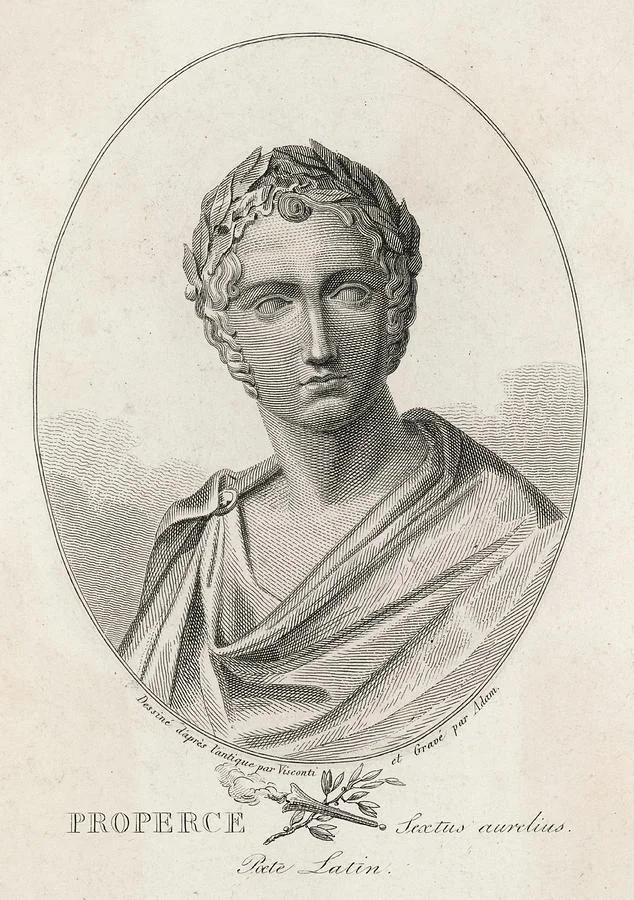
Sextus Propertius stands among the most distinctive voices of Roman love poetry. His elegies are by turns feverish, witty, learned, and deliberately unpredictable, moving from the frustrations of desire to Rome’s legends and public rituals. Yet almost everything known about the poet’s own life comes through the poems, where a crafted speaking persona can be difficult to separate from the historical man.
Early Life and the Road to Rome
Propertius was born in Umbria, probably around the middle of the first century BCE. Ancient and later evidence has connected him with the town of Assisi, though precise details of his birthplace and birth date remain uncertain. His poems recall the losses suffered by his family during the political upheavals around the Perusine War of 41 BCE, when Octavian’s forces defeated supporters of Mark Antony in Italy. These recollections suggest that the conflict affected his family, but they do not give a complete or independently verifiable account of his childhood.
He eventually made his way to Rome and entered the city’s literary world. His first collection, usually known as the Cynthia or Monobiblos, was probably published before 28 BCE. The poems introduced readers to an intense and complicated affair with a woman called Cynthia. Whether that name concealed a real individual, and how closely the poems reflected events in Propertius’ life, cannot be established with confidence.
Cynthia and the Art of Elegy
In the first three books, Cynthia is a magnetic presence: admired for her beauty and intelligence, but also the focus of jealousy, quarrels, separation, and reconciliation. Propertius turns the conventions of Roman love elegy into something restless and self-aware. His speaker is both consumed by passion and alert to the literary performance he is creating, drawing on Greek myths and earlier poetry to make private longing feel grand, comic, and sometimes painfully unstable.
The poems do not read like a straightforward diary. They stage a relationship through changing moods and scenes, and Cynthia herself emerges through the poet’s language rather than through an independent account. Propertius’ achievement lies partly in that tension: the reader is drawn into the drama while being reminded that it is artfully shaped.
The first book brought him to the attention of Gaius Maecenas, the influential patron associated with poets including Virgil and Horace. Propertius addressed Maecenas in later poems and became part of the literary circle around him. His relationship to the political culture of Augustus’ Rome, however, is not easily reduced to simple praise. Even when he turns to public subjects, his work retains an individual, often ironic perspective.
A Wider Roman Canvas
Across the four books that survive, Propertius’ interests broaden. Cynthia remains important, but later elegies also explore poetic ambition, friendship, Roman power, and the uses of myth. Book Four, the final collection, is especially striking for its stories about the origins of Roman customs, places, and religious practices. In poems voiced by figures such as the legendary Tarpeia and the god Vertumnus, Propertius recasts Roman history through intimate and dramatic encounters.
That change did not erase his earlier subject. Cynthia returns in two memorable poems in Book Four, including a vivid scene in which she confronts the poet after death. The collection’s mix of national legend and personal voice shows how flexibly Propertius could reshape elegy.
Legacy
The details of Propertius’ death and final years are unknown. His four books, however, secured his place among the leading Latin elegists, alongside Catullus, Tibullus, and Ovid. Later readers admired his compressed style, bold mythological learning, and willingness to make love poetry question its own claims. His work still feels intimate without offering a simple key to the man behind it: the poems invite readers into a vivid emotional world while keeping the boundary between biography and invention tantalizingly open.