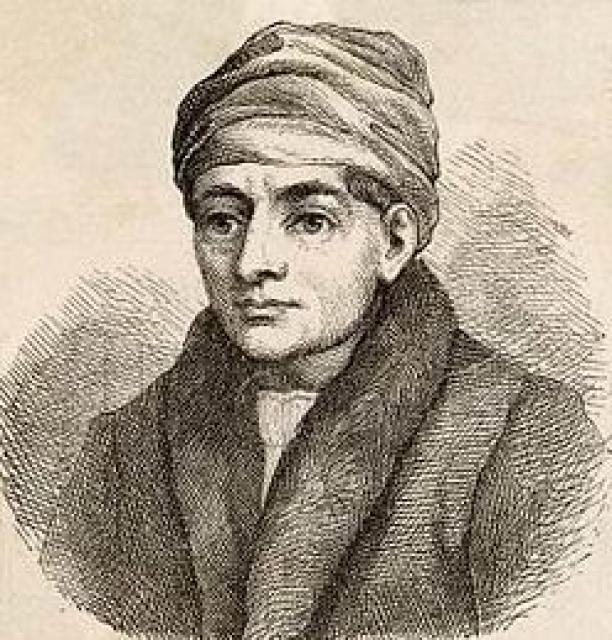
Regiomontan
 Germany
- Biography of Johannes Regiomontanus
- Translation and Astronomical Studies
- Astronomer and Instrument Maker
- Invitation to Rome and Death
- Contributions to Mathematical and Astronomical Sciences
- Legacy
Biography of Johannes Regiomontanus
Early Life and EducationJohannes Regiomontanus, born Johann Müller, was a German astronomer and mathematician born in 1436 in Konigsberg, Franconia. His father was a miller, and at the age of 12, Regiomontanus enrolled at the University of Leipzig. At 15, he moved to the University of Vienna, where he became a disciple of Georg Peuerbach and quickly rose to prominence as his close associate and friend.
Translation and Astronomical Studies
Upon Peuerbach's death in 1461, Regiomontanus inherited his unfinished translation of Ptolemy's "Almagest" from Greek to Latin. He embarked on the project with great diligence, learning Greek and traveling to Rome in 1461 to study Greek mathematical and astronomical texts.
Regiomontanus had at his disposal a manuscript of the "Almagest" written by Cardinal Bessarion from an ancient Greek manuscript. He also utilized Theon of Smyrna's commentary on the text, edited by George of Trebizond.
Astronomer and Instrument Maker
Regiomontanus conducted astronomical observations in various locations throughout his life. He observed lunar eclipses and wrote a treatise on Arab astronomer Alfraganus. In 1464, he completed his work "De triangulis omnimodis," a landmark in the development of trigonometry.
Invitation to Rome and Death
In 1475, Pope Sixtus IV invited Regiomontanus to Rome to reform the calendar. The Pope also appointed him Bishop of Regensburg. Regiomontanus set off for Rome in the autumn of 1475 but died tragically the following year at the age of 40. He was buried in the Pantheon.
Contributions to Mathematical and Astronomical Sciences
Regiomontanus made significant contributions to mathematics and astronomy, particularly in the following areas:
- Trigonometry:Elevate trigonometry to the status of an independent science through his treatise "De triangulis omnimodis."
- Mathematics:Introduced decimal fractions and used the tangent in his "Tabula foecunda."
- Astronomy:Computed ephemerides and improved the accuracy of calendars, which became the foundation for the Gregorian calendar.
- Calendar Reform:Played a key role in the development of a more accurate calendar at the request of Pope Sixtus IV.
- Instruments:Designed innovative astronomical instruments such as the baculus astronomicus, the cross-staff, and the Torquetum.
Legacy
Regiomontanus's work had a profound impact on the development of astronomy and mathematics in the Renaissance. He influenced the work of Nicolaus Copernicus and other Renaissance scientists. His writings and observations contributed to the scientific advancements that laid the groundwork for the Scientific Revolution.


