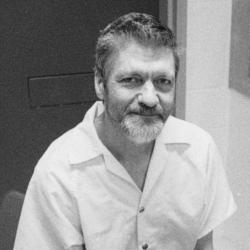
Renato Kurcho
 Italy
Italy- Renato Curcio: Founder and "Historical Leader" of the Red Brigades
- Political Activism
- Formation of the Red Brigades
- Terrorism and Imprisonment
- Escape and Recapture
- Ideology and Beliefs
- Killer of Aldo Moro
Renato Curcio: Founder and "Historical Leader" of the Red Brigades
Early LifeRenato Curcio was born in 1942 to a poor family. Despite financial constraints, he attended a Catholic college and later won a scholarship to study sociology at the University of Trento.
Political Activism
Curcio's political journey began in the early 1960s as an activist for the neo-fascist "New Order." Later, he joined the Catholic student organization, "University Consent," while maintaining ties to the "New Order."
In 1967, Curcio established the "Alternative University," an experimental research institution. Through this endeavor, he formed connections with renowned intellectuals such as Herbert Marcuse and Rudi Dutschke.
Formation of the Red Brigades
In 1969, Curcio married Margherita Cagol. Together, they moved to Milan and founded the "Metropolitan Political Committee," which later evolved into the "Left-Wing Proletarian Group." At a meeting of leftist extremists in 1969, Curcio presented a report outlining the principles for organizing and radicalizing the proletariat. This marked the genesis of the Red Brigades (BR).
Terrorism and Imprisonment
Curcio was deeply involved in the BR's terrorist activities. He participated in the robbery of a "Coin" department store, one of the BR's first acts of violence. In 1974, he was arrested and imprisoned in Novara.
Escape and Recapture
On February 18, 1975, Curcio escaped from prison with Cagol and two other associates. After his escape, he theorized the strategy of kidnapping for ransom as a means to finance the BR's activities and gain influence within the leftist movement.
In 1976, Curcio was recaptured and sentenced to a lengthy prison term after the Turin Trial.
Ideology and Beliefs
Curcio's ideology was heavily influenced by the writings of Marx and Mao. He saw the BR as an extension of the Chinese Cultural Revolution. He labeled his opponents "revisionists" and class enemies, while referring to BR members as "proletarian fighters."
Curcio believed the BR's struggle was part of a broader European revolutionary movement. He stated, "In France, Germany, Spain, Portugal, there are groups that operate on the same strategic hypothesis as we do."
Killer of Aldo Moro
In the trial for the assassination of Aldo Moro, Curcio defended the murder as "an act of revolutionary justice," claiming it was the most humane option in a class-divided society.