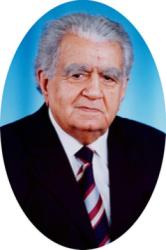
Rene Just Hauy
 France
- Biographical Overview
- Early Life and Education
- Career as a Mineralogist
- Revolutionary Era and Scientific Contributions
- Discovery of Symmetry and Crystallography Nomenclature
- Identification of Minerals
- Legacy
Biographical Overview
René Just Haüy (1743-1822): The Father of Scientific CrystallographyRené Just Haüy, a renowned French mineralogist, revolutionized the field of crystallography, establishing it as a scientific discipline.
Early Life and Education
Born in Saint-Just-en-Chaussée, France, Haüy initially pursued a career in theology. However, he quickly developed a passion for natural history and mineralogy under the guidance of Buffon and Daubenton.
Career as a Mineralogist
Haüy taught at the Collège de Navarre and later at the Collège du Cardinal Lemoine. In 1781, he became a member of the newly founded Mineralogical Society, where he presented groundbreaking work on the structure of granite and calcite crystals.
Revolutionary Era and Scientific Contributions
During the French Revolution, Haüy was imprisoned but later released. Despite his political neutrality, he continued his scientific pursuits. In 1793, he joined the commission for the standardization of weights and measures. In 1794, he became the curator of the Cabinet des Mines, and in 1795, he taught physics at the École Normale.
In 1784, Haüy published his seminal work, "Essai d'une théorie sur la structure des cristaux." This treatise introduced the concept of crystallographic planes and the law of rational intercepts, which established the basis for understanding crystal structure.
Discovery of Symmetry and Crystallography Nomenclature
Haüy also identified the fundamental law of crystal symmetry, recognizing that changes in crystal form result in uniform alterations in its constituent features. To describe complex crystal combinations, he devised a comprehensive, though now obsolete, nomenclature.
Identification of Minerals
In addition to his theoretical contributions, Haüy made significant discoveries in mineralogy. In 1792, he described the mineral euclase for the first time. In 1797, he recognized axinite as a distinct mineral species rather than a variant of tourmaline.
Legacy
Haüy's scientific legacy is immense. His work established the foundations of crystallography, enabling the study and understanding of crystal structures and the identification and classification of minerals. His name continues to be revered in the field of mineralogy, and his contributions have had a profound impact on the development of materials science and other related disciplines.