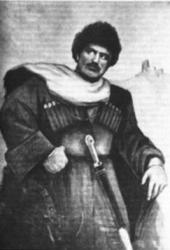
Reyngold Levenvolde
 Russia
- Early Life and Family Background
- Courtly Favor during Catherine I's Reign
- Announcing Anna Ivanovna's Succession
- Ascendancy under Anna Ivanovna
- Abuse of Position and Wealth
- Role in Anna Ivanovna's Illness and Regency
- Downfall and Trial
Early Life and Family Background
Reingold Gustav von Löwenwolde was born into the noble Löwenwolde family in Livonia in 1693. His brother, Karl Gustav, also held significant positions in government.
Courtly Favor during Catherine I's Reign
After the accession of Catherine I in 1725, Löwenwolde became a chamberlain and one of her close confidants. Rumors circulated that he was the empress's favorite due to his handsome appearance. However, he lacked interest in politics and played a limited role in governance.
Announcing Anna Ivanovna's Succession
In 1730, Löwenwolde received a letter from his brother informing him of the Supreme Privy Council's decision to invite Anna Ivanovna to the Russian throne. He advised her to accept the "Conditions" restricting her power, but to annul them once she was in power.
Ascendancy under Anna Ivanovna
Upon Anna Ivanovna's accession, Löwenwolde became her ober-hofmarschal (court marshal) and a major figure at court. He advocated for selecting Anna Leopoldovna's husband from German princely families and for her child to become the heir to the Russian throne.
Abuse of Position and Wealth
Löwenwolde used his favor with the empress to amass wealth, receiving gifts of land and money. He engaged in gambling and accumulated large debts. Despite these excesses, he maintained Anna Ivanovna's trust.
Role in Anna Ivanovna's Illness and Regency
During Anna Ivanovna's illness in 1740, Löwenwolde participated in the decision to appoint Ernst Johann von Biron as regent. Under Anna Leopoldovna, he enjoyed a powerful position at court and heavily influenced government affairs.
Downfall and Trial
On the day of Elizabeth Petrovna's coup in 1741, Löwenwolde was arrested and charged with various offenses, including abuse of authority. He was convicted and sentenced to death but was later pardoned and exiled. His titles, orders, and nobility were stripped from him.