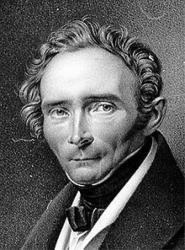
Richard Arnold
 Great Britain
Biography of Richard Arnold
Richard Arnold was an English merchant and chronicler who lived in London over five hundred years ago. Though he primarily worked as a merchant, he found a passion for writing and dedicated his life to creating a book about his beloved city. Arnold lived in the parish of St. Magnus near London Bridge and made a living trading with Flanders.
Unfortunately, very little is known about Arnold's personal life. The exact date and location of his birth, as well as the identity of his parents, remain unknown. He had a wife named Alice and a son named Nicholas. It is believed that he died shortly after the publication of his book, around 1520 or 1521.
Arnold's only book, titled "Customs of London," is a collection of various information about the city. It includes descriptions of London's customs, traditions, and business practices. The book also mentions Arnold's own trading ventures and his imprisonment in the castle of Sleyes on suspicion of espionage in 1488. He managed to escape this ordeal.
In addition to his writing, Arnold is mentioned as the executor of the will of John Amell the Elder, a London knife merchant, in 1473. He is also known to have traded in haberdashery goods. Arnold often traveled to Flanders for his business dealings.
The most intriguing part of Arnold's book is the inclusion of the "Ballade of ye Nottebrowne Mayde" without any explanation. This ballad, believed to have been written a few years before Arnold's book, gained popularity and was frequently reprinted in the 16th century. Its origins and authorship remain unknown.
"Customs of London" was first printed in Antwerp in 1502 by John Dasborough. The second edition, with an extended list of London officials, was attributed to printer Peter Treveris in South London. The third edition, published in 1811, was edited by Francis Douce. Copies of the first two editions are extremely rare and can be found in prestigious libraries.
Despite the mystery surrounding Arnold's personal life, his book remains a valuable historical document that provides insight into the customs and traditions of medieval London.