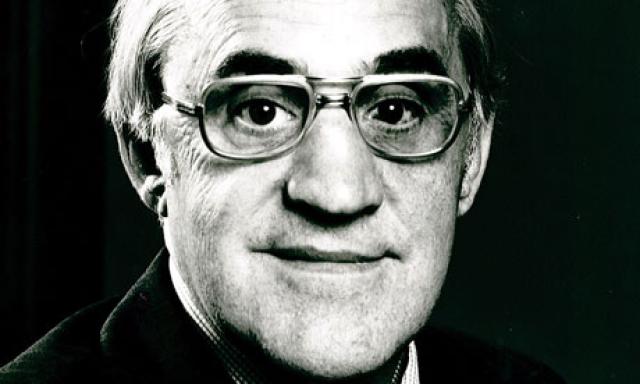
Richard Hoggart
 Great Britain
- Early Life and Education
- Academic Career
- The Uses of Literacy
- Centre for Contemporary Cultural Studies
- UNESCO and Goldsmiths' College
- Literary Criticism and Cultural Studies
- Later Career and Legacy
- Cultural Impact
Early Life and Education
Herbert Richard Hoggart was born in Leeds, England, on September 24, 1918, to a working-class family. After completing his undergraduate studies at the University of Leeds, he served in the Royal Artillery during World War II.

Academic Career
After the war, Hoggart worked as a lecturer at the University of Hull (1946-1959) and the University of Leicester (1959-1962). In 1962, he became a professor at the University of Birmingham, where he founded the Centre for Contemporary Cultural Studies in 1964.
The Uses of Literacy
Hoggart's most famous work, "The Uses of Literacy: Aspects of Working Class Life" (1957), was a groundbreaking study of working-class culture in England. It explored the ways in which literacy and mass media were shaping the lives of ordinary people.
Centre for Contemporary Cultural Studies
The Centre for Contemporary Cultural Studies became a renowned center for research on popular culture. Hoggart served as its director until 1973, establishing the institutional foundations for sociological studies in this field.
UNESCO and Goldsmiths' College
Hoggart served as Assistant Director-General of UNESCO from 1971 to 1975. From 1976 to 1984, he was Rector of Goldsmiths' College, University of London.
Literary Criticism and Cultural Studies
In addition to his work on working-class culture, Hoggart also wrote extensively on literature and cultural studies. His publications include "Auden" (1951), "Teaching Literature" (1963), and "Contemporary Cultural Studies: An Approach to the Study of Literature and Society" (1969).
Later Career and Legacy
Hoggart continued to write and publish throughout his life. He explored themes such as the future of broadcasting, the Great Depression in Britain, and the nature of European identity. His work has influenced generations of scholars and policymakers.
Cultural Impact
Hoggart's role as an expert witness in the Lady Chatterley's Lover obscenity trial is credited with influencing the jury's decision to acquit Penguin Books. His work has had a profound impact on our understanding of popular culture and its role in society.


