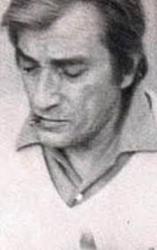
Robert Aldrich
 USA
USA- Robert Aldrich: A Hollywood Trailblazer
- Film Career Beginnings
- A Liberal-Humanist Auteur
- International Recognition
- The 1960s: Gothic Horrors and Military Classics
- Independent Filmmaking and Later Career
- Personal Life
Robert Aldrich: A Hollywood Trailblazer
Early Life and EducationRobert Burgess Aldrich was born in Cranston, Rhode Island, to Edward B. Aldrich, a newspaper publisher, and Lora Lawson. His grandfather was Senator Nelson W. Aldrich, and he was a cousin of former Vice President Nelson Aldrich Rockefeller. After graduating from high school in Providence, Rhode Island, Aldrich pursued economics at the University of Virginia.
Film Career Beginnings
In 1941, Aldrich left university to join RKO Radio Pictures, marking the start of his film career. He quickly rose through the ranks, becoming an assistant director and working alongside legendary filmmakers such as Jean Renoir, Abraham Polonsky, Joseph Losey, and Charlie Chaplin.
A Liberal-Humanist Auteur
The 1950s: Film Noir and Social CommentaryDuring the 1950s, Aldrich directed several television shows and released his first feature film, "The Big Leaguer." He emerged as a rare example of an American auteur, expressing his liberal-humanist worldview through diverse genres: the classic film noir "Kiss Me Deadly," the adaptation of Clifford Odets' play about Hollywood "The Big Knife," and the military drama "Attack," exposing careerism in the U.S. Army. He also directed popular Westerns, including "Apache" and "Vera Cruz," starring Burt Lancaster.
International Recognition
In 1959, Aldrich served as the head of the jury at the 9th Berlin International Film Festival.
The 1960s: Gothic Horrors and Military Classics
The 1960s saw the release of several successful commercial films. In 1962, he directed the gothic horror "What Ever Happened to Baby Jane?" starring Bette Davis and Joan Crawford. This was followed by "Hush... Hush, Sweet Charlotte," again starring Davis. In 1967, Aldrich directed one of the most iconic war films of all time, "The Dirty Dozen."
Independent Filmmaking and Later Career
After the success of "The Dirty Dozen," Aldrich formed his own production company. However, it struggled after a series of unconventional and unsuccessful projects. He returned to more mainstream films, continuing to infuse his work with humanist ideologies, as exemplified in "The Longest Yard" (1974) and "Ulzana's Raid" (1972).
Personal Life
Aldrich's marriage to Harriet Foster lasted from 1941 to 1965, and they had four children together. In 1966, he married model Sybille Siegfried.