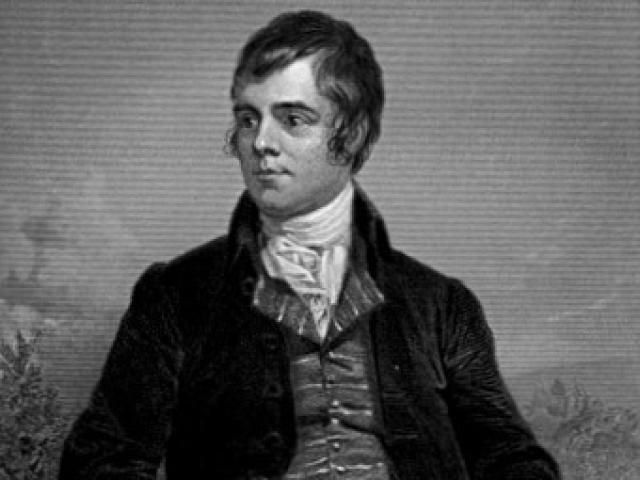
Robert Burns
 Great Britain
- Biography of Robert Burns
- Early Life and Education
- Love and Fame
- Return to Ayrshire
- Final Years and Legacy
Biography of Robert Burns
Robert Burns, the celebrated Scottish poet, is often hailed as a romantic poet in both the popular and literary sense of the term. However, Burns' worldview was rooted in the practical wisdom of the peasants amongst whom he grew up. In essence, he had little to do with romanticism. Instead, his poetry marked the last flourishing of Scottish poetry in the native language - a poetry that was lyrical, earthy, satirical, and at times mischievous. This tradition was established by R. Henryson (c. 1430 - c. 1500) and W. Dunbar (c. 1460 - c. 1530), forgotten during the Reformation era, and revived in the 18th century by A. Ramsay and R. Fergusson.
Early Life and Education
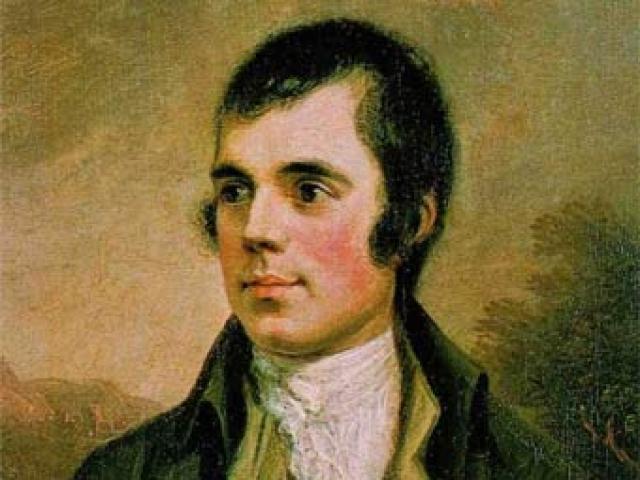
Robert Burns was born on January 25, 1759, in Alloway, Ayrshire, to William Burns, a gardener and tenant farmer. Robert and his brother Gilbert attended school for two years. In 1765, their father leased the farm of Mount Oliphant, and Robert, at the age of 12, began working as a full-time laborer. Despite often being underfed and putting a strain on his heart, he read anything he could get his hands on - from penny pamphlets to the works of Shakespeare and Milton. While at school, he only heard English, but through his mother and old servants, as well as the same pamphlets, he became familiar with the language of Scottish ballads, songs, and tales.
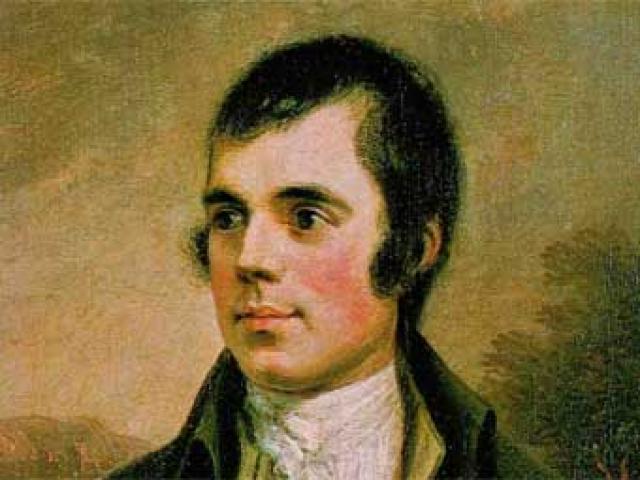
In 1777, his father moved the family to the farm of Lochlea near Tarbolton, and this marked a new chapter in Robert's life. In Tarbolton, he found a company of like-minded friends and soon became their leader. In 1780, Burns and his friends formed a jovial "bachelor's club," and in 1781, he joined the Masonic Lodge. On February 13, 1784, his father passed away, and Robert and Gilbert used the money left by him to move the family to the farm of Mossgiel near Mauchline. Even before this, in 1783, Robert began writing his youthful verses in a notebook, alongside considerably high-flown prose.
Love and Fame
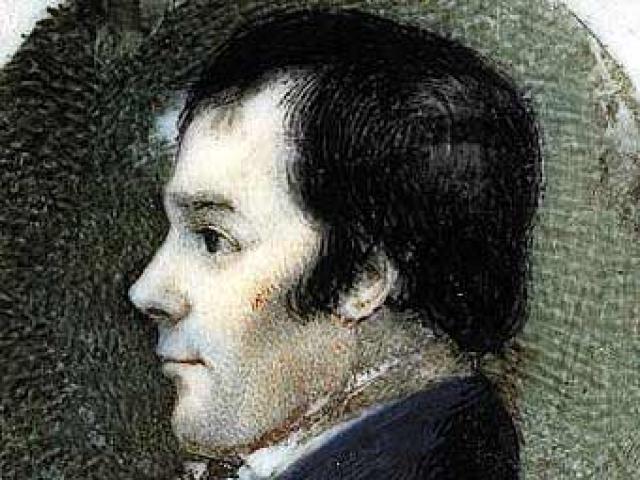
His involvement with a maid named Betty Paton led to the birth of his daughter on May 22, 1785. Local clergymen seized the opportunity to impose an epistle on Burns for his supposed adultery, but this did not hinder the public's enjoyment of his humorous works, such as "Holy Fair" and "The Prayer of Holy Willie." In early 1784, Burns discovered the poetry of Robert Fergusson and realized that the Scottish language was not a barbaric and dying dialect but rather capable of expressing any poetic nuance - from biting satire to lyrical ecstasy. He followed in the tradition of Fergusson, particularly in the genre of aphoristic epigrams. By 1785, Burns had gained some recognition as the author of vivid friendship addresses, dramatic monologues, and satires.
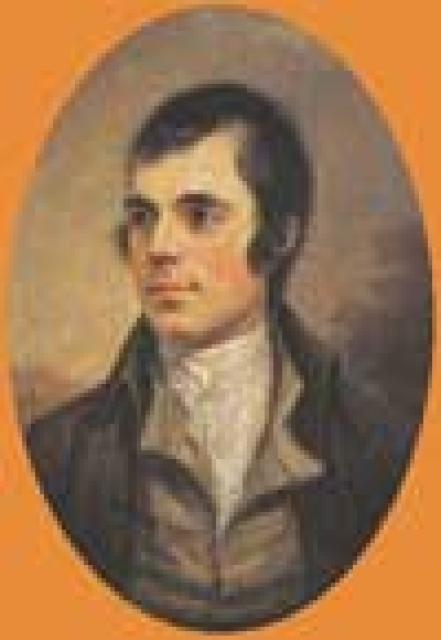
In 1785, Burns fell in love with Jean Armour (1765-1854), the daughter of a Mauchline contractor, James Armour. Burns gave her a written "certificate" - a document that, according to Scottish law, validated their factual, though unlawful, marriage. However, Armour broke off the relationship in April 1786 and refused to marry the poet. Even before this humiliation, Burns had decided to emigrate to Jamaica. It is incorrect to assume that he published his poems to raise money for the journey - the idea of the publication came later. The Poems, Chiefly in the Scottish Dialect, printed in Kilmarnock, went on sale on August 1, 1786. Half of the 600 copies sold by subscription, while the rest were sold within weeks. Fame came to Burns almost overnight, and influential gentlemen opened their doors to him. Armour dropped her lawsuit, and Betty Paton was compensated with 20 pounds. On September 3, 1786, Jean gave birth to twins. Local gentry advised Burns to forget about emigration and go to Edinburgh to launch a nationwide subscription. He arrived in the capital on November 29 and, with the assistance of John Cunningham and others, concluded a contract with publisher William Creech on December 14.
Return to Ayrshire
During the winter season, Burns was in high demand in society. He was patronized by the "Caledonian Hunters," members of an influential club, and at a meeting of the Grand Lodge of Scotland, he was proclaimed the "Bard of Caledonia." The Edinburgh edition of the Poems was published on April 21, 1787, and garnered around three thousand subscribers, earning Burns approximately 500 pounds, including one hundred guineas, which, following bad advice, he relinquished his copyright to Creech. Roughly half of the proceeds went towards supporting Gilbert and his family at Mossgiel. Before leaving Edinburgh in May, Burns met James Johnson, a semi-literate engraver and ardent lover of Scottish music, who had recently published the first volume of "The Scots Musical Museum." From autumn 1787 until the end of his life, Burns was effectively the editor of this publication. He collected texts and melodies, added his own verses to surviving fragments, and replaced lost or indecent texts with his own. He excelled at this to such an extent that without documented evidence, it is often impossible to distinguish between folk texts and Burns' own compositions. For "The Museum," and later for the more refined but less vivid "Select Collection of Original Scottish Airs" (1793-1805), Burns wrote over three hundred texts, each on its own tune.
Triumphant, Burns returned to Mauchline on July 8, 1787. Six months of fame did not go to his head, but it did change how he was regarded in the village. The Armours welcomed him warmly, and he resumed his relationship with Jean. However, a servant girl from Edinburgh named Peggy Cameron, who had a child with Burns, took legal action against him, prompting him to return to Edinburgh. There, on December 4, he met Agnes Craig McLehose, an educated married woman. Within three days, he dislocated his knee and, bedridden, engaged in a passionate correspondence with "Clarinda," as she called herself. Their encounter had more significant consequences. Burns' physician was acquainted with Robert Graham, the Commissioner of Excise for Scotland. Upon learning of the poet's desire to serve in the Excise, the doctor approached Graham, who allowed Burns to undergo proper training. In the spring of 1788, Burns completed his training in Mauchline and Tarbolton and received his diploma on July 14. The prospect of an alternative source of income gave him the courage to sign a lease for the Ellisland farm on March 18. Learning that Jean was pregnant again, her parents expelled her from their home. Burns returned to Mauchline on February 23, 1788, and, seemingly, immediately recognized her as his wife, although their public announcement only came in May, and their marriage was officially confirmed by the church court on August 5. On March 3, Jean gave birth to twin girls, who died shortly after. On June 11, Burns started working on the farm. By the summer of 1789, it became clear that Ellisland would not bring in any income in the near future, and in October, Burns obtained a position in the Excise through patronage. He performed his duties excellently, and in July 1790, he was transferred to Dumfries. In 1791, Burns gave up the lease of Ellisland, moved to Dumfries, and lived on his excise salary.
Final Years and Legacy
During his three years in Ellisland, Burns' creative work mainly consisted of texts for Johnson's "Museum," with the notable exception of the narrative poem "Tam O'Shanter." In 1789, Burns met the antiquarian Francis Grose, who was compiling a two-volume anthology titled "The Antiquities of Scotland." The poet offered to provide him with an engraving depicting Alloway Kirk, and Grose agreed on the condition that Burns would write a legend about witchcraft in Scotland to accompany the engraving. Thus, one of the best ballads in literary history was born. Meanwhile, passions were flaring around the French Revolution, which Burns enthusiastically embraced. Investigations were launched concerning the loyalty of government officials. By December 1792, Burns had accumulated so many complaints that the Chief Excise Officer, William Corbet, personally conducted the inquiry in Dumfries. Thanks to the efforts of Corbet and Graham, the matter ended with a warning for Burns to be more discreet. There were still plans to promote his career, but by 1795, his health began to decline. Rheumatism took a toll on his already weakened heart. Robert Burns passed away on July 21, 1796. Burns is hailed as a romantic poet - both in the popular and literary sense of the term. However, his understanding of the world was grounded in the practical wisdom of the peasants among whom he grew up. In essence, he had little to do with romanticism. On the contrary, his work marked the last flourishing of Scottish poetry in the native language - a poetry that was lyrical, earthy, satirical, and at times mischievous. This tradition was established by R. Henryson (c. 1430 - c. 1500) and W. Dunbar (c. 1460 - c. 1530), forgotten during the Reformation era, and revived in the 18th century by A. Ramsay and R. Fergusson.


