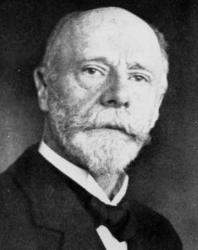
Robert Edwards
 Great Britain
- Biography of Robert Edwards
- Pioneering IVF Research
- The Birth of Louise Brown
- Establishing the First IVF Clinic
- Legacy
Biography of Robert Edwards
Robert Edwards was a British physiologist and pioneer of IVF. He was born on September 27, 1925, in Batley, West Yorkshire, into a working-class family. Edwards initially studied agronomy at Bangor University before switching to zoology after his military service during World War II.
Pioneering IVF Research
In the 1950s, Edwards began his research in the field of in vitro fertilization (IVF), firmly believing that couples facing infertility have the right to receive assistance. He once said, "I have seen the prolonged and considerable sadness caused by infertility. It is a matter to be fought. The most important thing in life is the birth of a child." However, his research in collaboration with Dr. Patrick Steptoe, who passed away in 1988, faced resistance from medical institutions and religious leaders, leading Edwards to seek private sponsors to fund his experiments. Early attempts at IVF failed due to a lack of hormonal treatment, but in 1977, Steptoe and Edwards implemented a new approach that avoided hormonal therapy by relying on carefully timed procedures.
The Birth of Louise Brown
On July 25, 1978, the first "test-tube baby," Louise Brown, was born. This event shook the medical world and sparked a revolution in the treatment of infertility. The breakthrough came after John and Lesley Brown, a couple who had been trying for nine years to conceive, agreed to undergo the experimental IVF procedure. The treatment involved extracting one of Mrs. Brown's ovaries and mixing it with her husband's sperm in a Petri dish. Two days later, the resulting embryo was implanted into Mrs. Brown's womb. While other candidates had received fertilized eggs, Lesley Brown's pregnancy was the first to progress beyond a few weeks. The Vatican warned of the "serious consequences for humanity" that such treatment could have, while others feared that the child could be born abnormal. However, the baby girl, born at the Oldham General Hospital by cesarean section, weighed 2.6 kg and was perfectly healthy.
Establishing the First IVF Clinic
Sir David English, the editor of the Daily Mail at the time, helped Edwards acquire the Bourn Hall Clinic near Cambridge, which in 1980 became the world's first IVF clinic. Mike Macnamee, the clinic's CEO, later stated, "Bob Edwards was one of our greatest scientists. His inspiring work in the early 1960s led to a breakthrough that changed the lives of millions of people worldwide for the better. He treated everyone who worked with him and was treated by him with great love." Edwards received the Nobel Prize and a prize fund of around £1 million in 2010. He passed away on April 10, 2013, at the age of 87 after a long battle with lung illness. He left behind his wife Ruth, five daughters, and 12 grandchildren. Professor Lisa Jardine, Chair of the Human Fertilisation and Embryology Authority (HFEA), stated, "Personally, Bob has always been a great mentor, colleague, and friend. It has been a great honor to work with him, and his death is a great loss to all of us."
Legacy
At the time of Edwards' death, over 4 million births had been achieved through IVF, according to The Guardian. Louise Brown, now 34 years old and married with one son, said after Edwards' passing, "His work with Patrick Steptoe brought happiness and joy to millions of people worldwide, allowing them to have children."