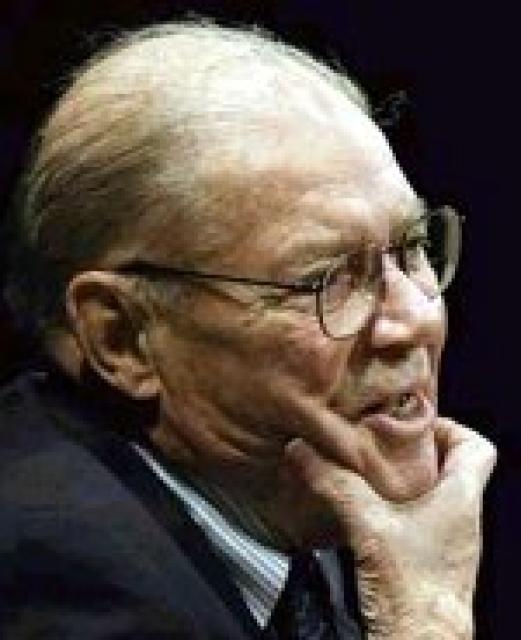
Robert McNamara
 USA
USABiography of Robert McNamara
Robert McNamara was born on June 9, 1916, in San Francisco, where his father worked as a commercial director in a wholesale shoe trading company. He graduated from the University of California, Berkeley in 1937 with a degree in Economics, and in 1939, he attended Harvard Business School, where he remained as a faculty member.
In 1943, McNamara joined the military, working on the analysis of the effectiveness of American bombings. He played a significant role in the planning of the nuclear bombing of Japan. In 1946, he began working at Ford Motor Company during its deep crisis. McNamara, along with a group of ten former military officers, known as the "Whiz Kids," helped the company avoid bankruptcy and regain its position as a leader in the automobile industry through modern planning and effective administrative organization.
In 1960, McNamara became the first non-Ford family member to be appointed as the President of Ford Motors. When John F. Kennedy became the President of the United States, he assembled a team of what he called the "best and the brightest" in the country. McNamara, along with other influential figures like McGeorge Bundy, Dean Rusk, Arthur Schlesinger, and Walt Rostow, held important positions in Kennedy's administration. McNamara accepted the position of Secretary of Defense, despite a significant decrease in salary compared to his position at Ford.
As Secretary of Defense, McNamara initially advocated for an increase in the number of intercontinental ballistic missiles in response to the hypothetical threat of Soviet nuclear expansion. This decision marked the beginning of another escalation in the arms race. The Bay of Pigs fiasco and the Cuban Missile Crisis further solidified McNamara's position in the Kennedy and Johnson administrations. He became the most influential member of the cabinet, with significant involvement in shaping the foreign policy course of the United States.
McNamara saw the war in Vietnam as an operation to salvage the declining automobile corporation, which required efficient management and wise strategy. He believed that losing Vietnam would have serious implications for the global American sphere of influence and the entire system of countries dependent on the United States. However, as the United States became more entangled in Vietnam, McNamara's circle of supporters, who endorsed Johnson's and his policies, began to shrink. Even McNamara himself started expressing serious concerns about the war in 1966-67. The turning point came with the massive offensive by the South Vietnamese forces during the Tet Offensive, coinciding with the Vietnamese New Year, and General Westmoreland's demand to increase the American troop presence in the country from 500,000 to 700,000.
In 1968, McNamara resigned as the Secretary of Defense and took over as the President of the World Bank. He transitioned from leading the giant military machinery to managing significant resources that could help in building a new world. During his tenure, McNamara aimed to direct the bank's loans towards healthcare, education, and food procurement in developing countries, closely monitoring the effectiveness of these projects.
In 2003, a documentary film titled "The Fog of War: Eleven Lessons from the Life of Robert S. McNamara" was released. It featured McNamara's monologues and archival footage, recounting the history of wars in the 20th century. The film was recognized by the American Academy as the best documentary of the year.


