Robert Mulliken
 USA
- Childhood and Education
- Early Research and European Influences
- Molecular Orbital Theory
- War Work and Recognition
- Personal Life and Later Years
- Legacy
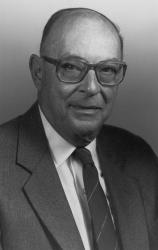
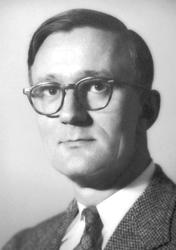
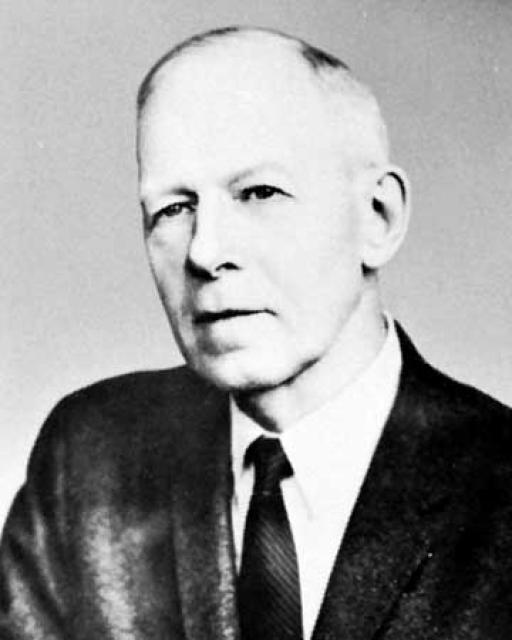
Robert Sanderson Mulliken helped give chemistry a new way to picture the invisible architecture of molecules. By treating electrons as belonging to an entire molecule rather than assigning them rigidly to individual atoms, he helped build molecular orbital theory into one of the central tools of modern chemical science. The work earned him the 1966 Nobel Prize in Chemistry, but it was the result of a long, patient career shaped by spectroscopy, quantum mechanics, and an unusually sustained curiosity about how molecules behave.
Childhood and Education
Mulliken was born on June 7, 1896, in Newburyport, Massachusetts. His father, Samuel Parsons Mulliken, was a chemistry professor at the Massachusetts Institute of Technology, and science was part of the family atmosphere from the start. Robert attended MIT, graduating in 1917 with a bachelor’s degree in chemistry.
As the United States entered the First World War, he worked in Washington, D.C., in a chemical laboratory connected with research on chemical warfare. After the war, he briefly worked for the New Jersey Zinc Company. The industrial post gave him practical experience, but he soon returned to academic research, entering graduate school at the University of Chicago in 1919.
Early Research and European Influences
At Chicago, Mulliken studied under physical chemist William Draper Harkins. His doctoral work involved separating mercury isotopes by evaporation, a demanding experimental problem that earned him a Ph.D. in 1921. A National Research Fellowship then allowed him to continue research and travel among leading laboratories.
Mulliken’s early scientific life bridged experiment and theory. He investigated molecular spectra, the patterns of light absorbed or emitted by molecules, and used those observations to ask what they revealed about molecular structure. During fellowships in Europe in 1930 and 1932–33, he worked among physicists and chemists who were developing the new quantum mechanics. These exchanges, including contact with theorists such as Friedrich Hund, helped shape the conceptual framework that became his signature contribution.
Molecular Orbital Theory
In the 1920s and 1930s, Mulliken developed a method for describing the electrons in a molecule through molecular orbitals: mathematical states spread across the whole molecule. This differed from approaches that pictured chemical bonds chiefly as localized pairs of electrons between specific atoms. The molecular-orbital picture made it possible to explain a broad range of molecular structures and spectra using quantum theory.
The method was not a single discovery delivered fully formed. Mulliken and other researchers built it through papers that connected spectroscopic evidence, symmetry, and quantum mechanics. His work helped clarify how electrons occupy molecular states and how those states relate to a molecule’s properties. He also contributed vocabulary that became standard in the field, including the use of “orbital” for a one-electron wave function.
In 1926, he joined New York University’s physics department. Two years later he returned to the University of Chicago, where he spent the rest of his academic career. He became a leading presence in chemical physics and spectroscopy, publishing a remarkable series of research papers across several decades. In 1952, he established Chicago’s Laboratory of Molecular Structure and Spectra, which drew researchers to study molecular structure and electronic spectra.
War Work and Recognition
During the Second World War, Mulliken contributed to wartime scientific research at the University of Chicago’s Metallurgical Laboratory, part of the Manhattan Project effort. His work there included research and scientific administration related to the project. After the war, he returned to his central interests in molecular structure and spectroscopy.
The Nobel Committee awarded him the 1966 Nobel Prize in Chemistry for fundamental work on chemical bonds and molecular electronic structure using the molecular-orbital method. At the age of 70, he became one of the older scientists to receive the chemistry prize. He also received major professional recognition, including the Priestley Medal in 1983, and was elected to leading scientific societies.
Personal Life and Later Years
Mulliken married Mary Helen von Noé in 1929. She accompanied him during his European fellowship years; the couple had two daughters. She died in 1975. Though famous in scientific circles, he was often described as soft-spoken and deeply focused on research. Colleagues and biographers associated him with the nickname “Mr. Molecule,” a fitting label for a scholar whose work returned again and again to the structure of matter.
He continued writing and publishing into the early 1980s, and his autobiography, Life of a Scientist, appeared posthumously in 1989. Mulliken died on October 31, 1986, at age 90, while staying at his daughter’s home in Virginia.
Legacy
Mulliken’s achievement was not simply to offer a competing diagram of chemical bonds. Molecular orbital theory gave scientists a flexible framework for applying quantum mechanics to molecules, interpreting spectra, and calculating chemical behavior. Later generations refined the mathematics and computational methods, but the questions and language he helped establish remain embedded in chemistry. His career linked careful measurement with abstract theory and helped make the electronic structure of molecules a subject that could be described, tested, and calculated with increasing precision.