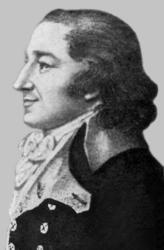
Robert Robinson
 Great Britain
Biography of Robert Robinson
Robert Robinson, an English organic chemist, was born in Rufford Farm, near Chesterfield, Derbyshire. He was the eldest of five children of William Braberry Robinson and Jane Davenport. The Robinson family was prosperous, involved in the production of bandages. When Robert was three years old, the family moved near New Brampton.
Robert attended Chesterfield Grammar School and later enrolled in Fulneck School, a religious community school located between Leeds and Bradford. He remained there until 1902, after which he joined the University of Manchester. The chemical faculty at Manchester, led by W. Perkin Jr., was a leading center for scientific research. Notable members of the faculty at that time included Chaim Weizmann, the future first president of Israel, and his fellow student William Horsfall, who later became a Nobel laureate in 1937.
After graduating with distinction from the university in 1905, Robinson began working at Perkin's private research laboratory. From 1907, he studied the structure and chemical properties of brazilin, a dye obtained from wood. Robinson returned to the University of Manchester in 1906 and became a fellow from 1907 to 1909. In 1910, he obtained his doctoral degree and two years later, at the age of 26, became the first professor of organic chemistry at the University of Sydney in Australia.
Robinson later held positions as the head of organic chemistry departments at the universities of Liverpool (1915-1920), St. Andrews (1921), Manchester (1922-1928), and University College London (1928-1930). He eventually succeeded Perkin at the University of Oxford.
In 1920, Robinson became the director of the scientific research department at British Dyestuffs Corporation, and in 1929, he became a consultant on dyes for Imperial Chemical Industries. In 1922, Robinson, along with David Doig Pratt, began publishing a series of papers on dyes that focused on benzo[b]pyrylium salts. However, his main interest lay in alkaloids. In 1925, he and his colleague J.M. Gulland studied the structure of morphine and synthesized berberine. The following year, he determined the structure of neopine (beta-codeine), and in 1935, he synthesized bicuculline.
Robinson's theory of the biogenesis of alkaloids was later confirmed by analyzing the reactions occurring in plants using isotopic labeling. He demonstrated the biogenetic relationship between pseudostychnine and vomicine in 1948. He synthesized and determined the structure of many other alkaloids, including brucine, aconitine, and ajmaline (jointly with R. Woodward, Nobel laureate, 1965). Robinson first started working on strychnine in 1910 when he and Perkin proposed an incorrect formula for the substance. In 1945, Robinson arrived at the correct formula for strychnine, and Woodward synthesized it in 1954.
Robinson, along with his wife, conducted research on flower pigments, anthocyanins (blue-red pigment), and anthoxanthins (yellow pigment). They synthesized many pigments identical to natural substances and developed express tests for determining pigments, publishing a catalog of flower pigments. Steroids also fascinated Robinson. In collaboration with numerous scientists, including G.U. Cornforth (Nobel laureate, 1975), he synthesized the female hormone estrone and three synthetic estrogens: stilbestrol, hexestrol, and dienestrol.
Robinson made significant contributions to the electronic theory of organic compounds, as well as to the understanding of electron distribution and mesomerism in aromatic compounds (1922-1926). During World War II, he focused on explosives and protection against chemical weapons, becoming one of the creators of antibiotic chemistry and the organizer of antimalarial drug production in the UK.
From 1945 to 1950, Robinson served as the President of the Royal Society of London, playing a vital role in reestablishing scientific research in the post-war years and promoting the activities of international scientific unions. In 1947, he was appointed as the UK delegate to the first UNESCO conference. He also served as the President of the British Association for the Advancement of Science (1951) and the President of the Society of Chemical Industry (1958-1959).
Apart from his scientific pursuits, Robinson had a passion for music, photography, and literature. He was an avid gardener and enjoyed mountaineering. Despite losing his sight after turning 80, he continued to play chess through correspondence and co-wrote a book on the art and science of chess two years before his death.
In the last years of his life, Robinson began writing a two-volume autobiography and an introductory textbook on organic chemistry, which was published posthumously. His contributions to the synthesis and analysis of alkaloids enriched the arsenal of organic chemists. The structures of alkaloids, which serve as medicinal agents, have been the starting point for the discovery of new synthetic drugs. The synthesis of cocaine analogs led to the creation of novocaine, while the analog of quinine resulted in the development of acrichine and more. The alkaloids and medicinal substances obtained through the synthetic search for their analogs constitute a significant portion of modern drugs.
Robinson's developed synthetic methods and analytical techniques have enriched the repertory of organic chemists. In 1937, he created his own method for the synthesis of carbocyclic structures, which found applications in organic synthesis. His theoretical contributions to organic chemistry are included in all modern textbooks.
Together with R. Woodward, Robinson co-founded the journal "Tetrahedron" in 1957, which focuses on organic chemistry and remains highly respected.
Robinson served as the director of Petrochemicals Limited, a company involved in oil cracking, which was later acquired by Shell in 1935. He continued to hold positions in the company until 1975.
Throughout his career, Robinson was a member of over 30 government committees, many of which he chaired. He was a well-rounded individual who made significant contributions to various fields, leaving a lasting impact on the scientific community.