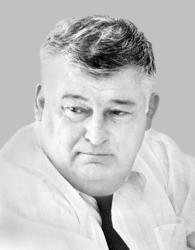
Roger Baldwin
 USA
USABiography of Roger Baldwin
Early Life and EducationRoger Baldwin, a social activist from America, was one of the founders of the American Civil Liberties Union (ACLU). Baldwin was born on January 22, 1884, in Wesley, Massachusetts. He received an excellent education at Harvard University and graduated with a master's degree.

Social Work and Advocacy
After completing his studies, Baldwin taught sociology at Washington University for some time. Simultaneously, he worked as a social worker and even became the head of the probation department for juvenile cases. It was during this time that he co-authored a book with Bernard Flexner, which gained significant attention and laid the foundation for Baldwin's reputation as a social activist.
Throughout his life, Baldwin was a pacifist and a member of the American Union Against Militarism (AUAM). He spoke out against American involvement in World War I and even spent a year in prison for refusing military service on ideological grounds. Upon his release, Baldwin called on the AUAM to protect the rights of conscientious objectors. This led to the government introducing the Selective Service Act, and the AUAM established the Civil Liberties Bureau (CLB) under Baldwin's leadership.
In 1917, the CLB became an independent organization and was renamed the National Civil Liberties Bureau (NCLB). By 1920, the NCLB, led by Baldwin, continued its work as the American Civil Liberties Union (ACLU). Baldwin served as the director of the ACLU for over 30 years. During his tenure, the union participated in several high-profile legal cases, such as the "Scopes Monkey Trial," the Sacco and Vanzetti case, and attempts to ban James Joyce's novel "Ulysses." The ACLU achieved numerous successes under Baldwin's leadership.
Later Years and Legacy
After retiring from the ACLU in 1950, Baldwin did not leave the realm of politics. He founded another organization dedicated to the protection of rights and freedoms, known as the International League for the Rights of Man. Following World War II, he worked extensively in Japan, for which the Japanese government awarded him the Order of the Rising Sun. He also worked in post-war Germany and Austria.
In 1981, President Carter awarded Baldwin the Presidential Medal of Freedom. Half a year later, the human rights advocate passed away from a heart attack at the age of 97. Baldwin's contributions to civil liberties and his unwavering commitment to social justice continue to leave a lasting impact.