Rosi Wolfstein
 Germany
- Rosi Wolfstein: A Trailblazing Socialist Politician
- Involvement in Socialist Movements
- Anti-War Activism during World War I
- Involvement in the German Revolution
- Connection to Rosa Luxemburg
- Political Career in the Weimer Republic
- Break with the KPD and Exile
- Nazi Era and Emigration
- Post-War Life
Rosi Wolfstein: A Trailblazing Socialist Politician
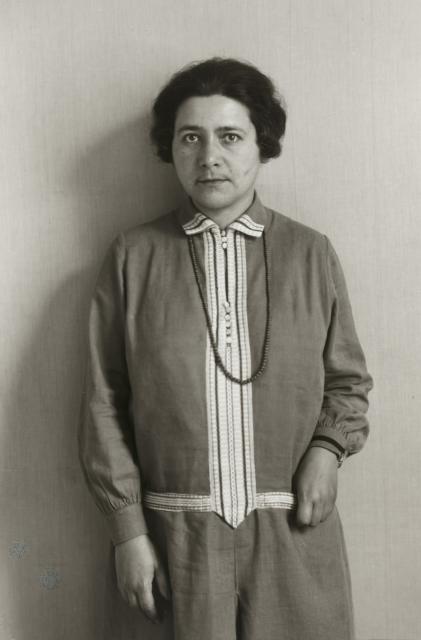
Early Life and EducationRosi Wolfstein was born on January 12, 1888, in Witten, Germany, to Jewish parents, Samuel Wolfstein and Clara Adler. After attending the Städtisches Lyzeum in Witten, she worked as a clerk.
Involvement in Socialist Movements
In 1907, Wolfstein joined the Society for Women's and Girls' Labor Education in Hagen. She became a member of the Social Democratic Party (SPD) in 1908 and the free trade union for clerical workers in 1910. That same year, she met Rosa Luxemburg and became a close friend and mentee, attending the SPD's Imperial Party School in Berlin from 1912 to 1913.
Anti-War Activism during World War I
With the outbreak of World War I, Wolfstein vehemently opposed the SPD's policy of supporting the war effort. She became a member of the Spartacus League in Duisburg and was repeatedly arrested during the conflict. In 1916, she participated in the illegal youth conference in Jena, and in 1917, she represented the Spartacus League at the founding congress of the Independent Social Democratic Party (USPD) in Gotha.
Involvement in the German Revolution
During the November Revolution of 1918, Wolfstein was elected to the Council of Workers' and Soldiers' Deputies in Düsseldorf. As a gifted orator, she was labeled a "dangerous agitator" in the files of the Kaiser's police. The Düsseldorf branch of the Spartacus League delegated Wolfstein to attend the founding congress of the Communist Party of Germany (KPD) in 1918.
Connection to Rosa Luxemburg
After Rosa Luxemburg's assassination in 1919, her estate appointed Wolfstein as caretaker of her archive, which she worked on with her husband, Paul Frölich. Their biography of Luxemburg, "Rosa Luxemburg: Thoughts and Deeds," was published in Paris in 1939, and Luxemburg's life remained a central focus of Wolfstein's work throughout her life.
Political Career in the Weimer Republic
Wolfstein was elected to the Prussian Landtag from the United Communist Party of Germany from 1921 to 1924, serving as deputy chair of the parliamentary group. She also held positions on the party's executive committee and its organizational bureau. However, in 1924, she resigned from all her posts in protest against the "ultra-right" leadership of Ruth Fischer and Arkadij Maslow.
Break with the KPD and Exile
Wolfstein continued to publish Rosa Luxemburg's works and worked as an editor for Malik-Verlag with Paul Frölich. In 1929, she was expelled from the KPD for deviating from the party line and joined the Communist Party - Opposition. She later became part of the minority that formed the Socialist Workers' Party of Germany (SAPD) in 1932, which she joined.
Nazi Era and Emigration
After the Nazis came to power in 1933, Wolfstein fled to Brussels and then to Paris, where she became part of the SAPD's underground leadership and published under the pseudonym Martha Koch. With the outbreak of World War II, she was interned in France but managed to emigrate to the United States in 1941 with Frölich's help.
Post-War Life
Wolfstein settled in New York City and worked for various charities from 1945 onward. In 1948, she officially married Paul Frölich. In 1951, Wolfstein returned to Frankfurt and joined the SPD. She remained a staunch leftist, advocating for a "third way" for the SPD. After Frölich's death in 1953, she managed his archive and edited some of his works. Rosi Wolfstein passed away in 1987 and was buried in Frankfurt's Main Cemetery.