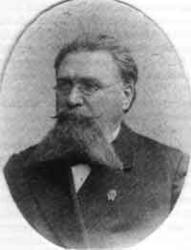
Roulend Hill
 Great Britain
- Sir Rowland Hill: The Father of the Postage Stamp
- Early Life and Interests
- Postal Reform and the Invention of the Postage Stamp
- Legacy as "Mr. Postman"
- Other Accomplishments
- Honors and Recognition
- The Global Spread of Postage Stamps
Sir Rowland Hill: The Father of the Postage Stamp
Sir Rowland Hill (1795-1879), an English educator and postal administrator, is widely regarded as the inventor of the modern postage stamp.
Early Life and Interests
Born into a large family in December 1795, Rowland Hill exhibited a keen interest in astronomy, mathematics, and navigation from a young age. This multifaceted curiosity persisted throughout his life.
Postal Reform and the Invention of the Postage Stamp
In 1837, Hill published his influential pamphlet, "Post Office Reform: Its Importance and Practicability." He proposed a uniform postage rate throughout the country, prepaid by means of "small stamped pieces of paper of a convenient size to be affixed to the letter." This became the classic definition of the postage stamp. Other suggested reforms included eliminating postal privileges for members of Parliament and the court.
Despite opposition from Parliament for over three years, Hill's reforms were eventually implemented. The first postage stamp was issued in England on May 1, 1840. It featured the profile of Queen Victoria and became an instant success.
Legacy as "Mr. Postman"
Hill's postal reforms significantly increased the volume of correspondence sent by mail. In England, he is fondly known as "Mr. Postman." His contributions extended beyond stamps, including the invention of a pendulum system for clocks, improvements to steam engines, and the development of an underground pneumatic tube system for rapid mail delivery.
Other Accomplishments
Hill was a prolific inventor and writer. He wrote several books on education and founded a comprehensive school with a library, laboratories, and athletic facilities. He also conducted experiments with gunpowder, studied compressed gases, and designed road-building machinery.
Honors and Recognition
Hill's achievements in postal reform and other fields earned him widespread recognition. He was buried in Westminster Abbey and remembered on postage stamps worldwide on the 100th anniversary of his death.
The Global Spread of Postage Stamps
Under Hill's inspiration, postage stamps quickly gained widespread adoption. By 1858, they had been introduced in countries such as Brazil, Switzerland, the United States, and Russia.