Roy Cohn
 USA
- A prodigy in the courtroom
- At McCarthy’s side
- A powerful New York fixer
- Private identity and public legacy
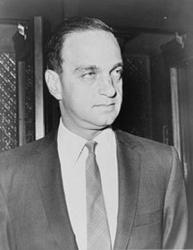
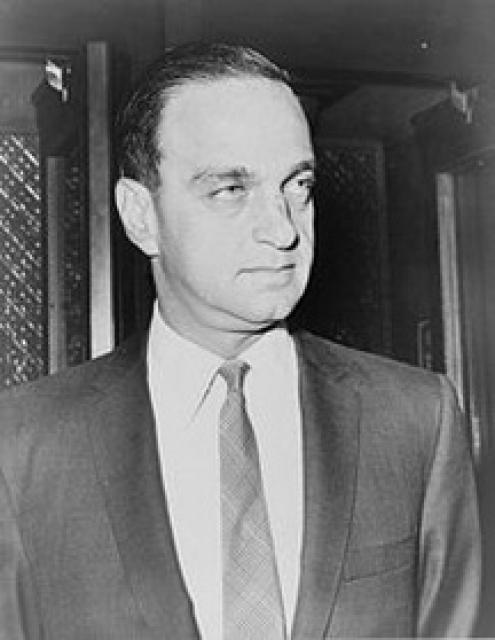
Roy Cohn was an American lawyer whose career took him from the prosecution of Julius and Ethel Rosenberg to the center of Senator Joseph McCarthy’s anti-communist investigations, and later into the orbit of New York’s wealthy and politically connected. A forceful courtroom performer and political operator, he became both a notorious symbol of the Red Scare and a mentor to a young Donald Trump. His reputation remained contested through a final chapter marked by professional discipline and illness.
A prodigy in the courtroom
Born on February 20, 1927, in the Bronx, New York, Cohn grew up in an affluent Jewish family. His father, Albert Cohn, was a New York State Supreme Court judge. Roy studied at Columbia University, graduating in 1946, and completed his law degree the following year. He was admitted to the New York bar in 1948 and began work as an assistant U.S. attorney in Manhattan.
The young prosecutor drew national attention in 1951 as part of the federal team that helped secure espionage convictions against Julius and Ethel Rosenberg. The couple were executed in 1953, and the case remains one of the most debated episodes in American legal and political history. Cohn later described his own role in the prosecution with pride; critics have viewed his aggressive tactics as emblematic of the era’s harsh anti-communist climate.
At McCarthy’s side
In 1953, Senator Joseph McCarthy brought Cohn to Washington as chief counsel to his Senate investigations subcommittee. At the height of the Cold War Red Scare, the committee interrogated people suspected of communist ties and helped spread accusations that careers and reputations could be destroyed by association alone.
Cohn’s efforts to obtain favorable treatment in the Army for his friend and former aide G. David Schine became a flashpoint. The resulting 1954 Army-McCarthy hearings put Cohn and McCarthy under intense public scrutiny. Cohn left McCarthy’s staff that year and returned to New York, where he began building a private legal practice.
A powerful New York fixer
Cohn cultivated a reputation as an aggressive lawyer who could bring pressure to bear in business, politics and the courts. His clients included celebrities, religious institutions, organized-crime figures and real-estate developers. In 1973, he began representing Donald Trump and his father when the federal government sued their company over alleged racial discrimination in housing. Over time, Cohn became more than Trump’s attorney: he advised him on public relations, litigation and navigating New York’s power networks.
His legal career was also shadowed by accusations of misconduct. In June 1986, New York’s Appellate Division disbarred him after sustaining charges involving dishonesty, fraud, deceit and misrepresentation. Cohn died weeks later, on August 2, at the age of 59.
Private identity and public legacy
Cohn was gay, but he did not publicly acknowledge that identity and was reported to have denied it. The contradiction between his private life and his participation in anti-communist campaigns that targeted gay people became part of his legacy. In 1986 he died from complications related to AIDS, although he publicly maintained that he had liver cancer.
After his death, playwright Tony Kushner made him a central character in Angels in America, placing his illness and political persona within a wider story about AIDS, power and queer life in the United States. The role helped keep Cohn in the public imagination, not simply as a lawyer linked to McCarthy and Trump, but as a figure whose influence and personal contradictions exposed the darker side of American political culture.