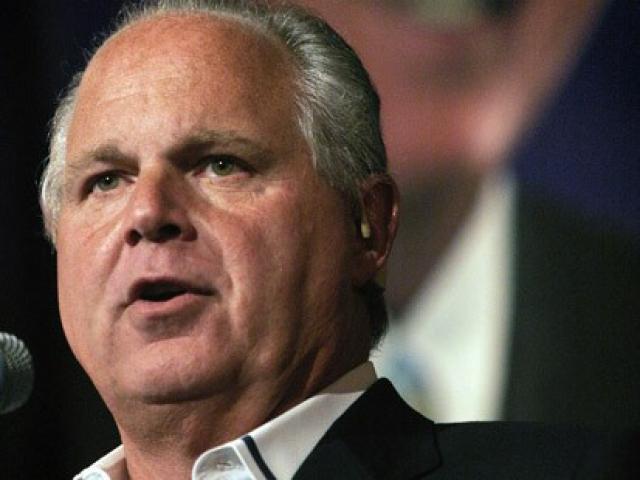
Rush Limbaugh
 USA
- Early life and first radio jobs
- The national breakthrough
- Influence, books and public honors
- Controversies and criticism
- Health and personal life
- Final years and legacy
Rush Limbaugh transformed political talk radio into a mass-media force, building a nationally syndicated show around sharp opinions, satire and direct engagement with listeners. To his supporters, he was a powerful advocate for conservative ideas; to critics, he was a divisive broadcaster whose insults and disputed claims intensified political and cultural conflict. For more than three decades, The Rush Limbaugh Show made him one of the most influential and controversial voices in American media.
Early life and first radio jobs
Rush Hudson Limbaugh III was born on January 12, 1951, in Cape Girardeau, Missouri. He grew up in a prominent local family. His father, Rush Limbaugh Jr., was a lawyer and a World War II veteran; his mother, Mildred, raised Rush and his younger brother, David. Several relatives were lawyers and public figures, and the family took a strong interest in politics.
Limbaugh became fascinated with radio while still young. At 16, he began working as a disc jockey at a local station under the on-air name “Rusty Sharpe.” He briefly attended Southeast Missouri State University but left before completing his first year, choosing to pursue broadcasting. His early jobs in Pennsylvania and Kansas City proved difficult: he was dismissed from some stations and struggled to find a lasting place in the industry.
In 1979, he left radio to work for the Kansas City Royals baseball organization, where he handled promotions and special events. The job gave him a stable break from a career that had yet to take off, but he returned to broadcasting in the early 1980s, first in Kansas City and then in Sacramento.
The national breakthrough
In 1984, Limbaugh became a talk-show host at KFBK in Sacramento. His program combined political commentary with comedy, pop-culture references and a deliberately combative style. The format quickly attracted listeners and drew the attention of radio executive Edward McLaughlin, who helped bring the show to a national audience.
The Rush Limbaugh Show began national syndication in August 1988 on 56 stations, broadcast from New York’s WABC. Its launch followed the Federal Communications Commission’s repeal of the Fairness Doctrine in 1987, which had required broadcasters to present contrasting viewpoints on controversial issues. The changed environment helped create room for explicitly partisan talk formats.
Limbaugh’s show grew rapidly, eventually reaching hundreds of stations. He spoke for several hours each weekday, with monologues, calls from listeners and recurring comic features. The mix of political argument and entertainment helped define the style of conservative talk radio that flourished in the 1990s. He also hosted a television program from 1992 to 1996 and toured nationally with his “Rush to Excellence” speaking events.
Influence, books and public honors
Limbaugh’s influence extended beyond broadcasting. He was widely credited with helping energize conservative voters and shape the Republican Party’s media strategy, though the extent of his impact on particular elections was often debated. His success showed that a personality-driven radio host could build a national audience and exert influence on the political conversation without relying on traditional news formats.
His books, including The Way Things Ought to Be and See, I Told You So, became bestsellers. Later, he co-wrote the children’s historical fiction series The Adventures of Rush Revere. He received five Marconi Awards for syndicated radio personality of the year, entered the Radio Hall of Fame in 1993 and the National Association of Broadcasters Hall of Fame in 1998.
In February 2020, President Donald Trump awarded Limbaugh the Presidential Medal of Freedom during the State of the Union address, after Limbaugh had publicly announced that he had advanced lung cancer. The decision drew attention as both recognition of his cultural influence and a political gesture toward a prominent ally.
Controversies and criticism
Limbaugh’s style generated recurring backlash. Critics accused him of using demeaning language about women, Black people, gay people and political opponents. Supporters often viewed his attacks as satire or blunt political criticism, but several incidents became national controversies.
In 2007, he made a remark about Black NFL players that compared the league to a gang conflict. In 2012, after Georgetown law student Sandra Fluke testified in support of insurance coverage for contraception, Limbaugh called her a “slut” and a “prostitute” and made further personal comments. He apologized for his word choice after widespread criticism, and advertisers withdrew from his program. The episode became one of the most prominent examples of the consequences of his confrontational approach.
He was also criticized over comments about AIDS, race and the wars in Iraq and Afghanistan. The intensity of these disputes contributed to his reputation as a polarizing figure whose show thrived on conflict as much as on political analysis.
Health and personal life
Limbaugh experienced severe hearing loss in 2001, which he attributed to an autoimmune disorder. Cochlear implants restored much of his hearing and allowed him to continue broadcasting. In 2003, he disclosed an addiction to prescription painkillers and entered rehabilitation. He later said the addiction was connected to a long-standing need for acceptance. In 2006, he was arrested in a prescription-drug investigation; the case was resolved after he completed a treatment program and the charges were dropped.
He married four times. His first three marriages, to Roxy McNeely, Michelle Sixta and Marta Fitzgerald, ended in divorce. In 2010, he married Kathryn Rogers. He had no children.
Final years and legacy
Limbaugh announced in February 2020 that he had advanced lung cancer. He continued broadcasting when his health allowed and remained a major public figure through the 2020 election. He died at his home in Palm Beach, Florida, on February 17, 2021, at age 70.
His legacy is inseparable from the transformation of talk radio and the growing influence of partisan media. Millions listened to him, and his supporters credited him with giving voice to people who felt ignored by mainstream outlets. His detractors saw him as a force that normalized personal attacks and deepened political division. Both views reflect the scale of his impact: Limbaugh did not merely comment on the American right; he helped shape how it spoke to itself and to the country.


