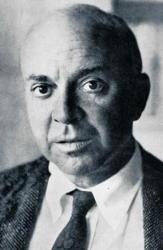
Sabit Mukanov
 Kazakhstan
- A Literary Titan: Sabit Mukanov
- Literary Career
- Literary Organizer
- Researcher and Scholar
- Legacy and Honors
- Posthumous Recognition
A Literary Titan: Sabit Mukanov
Early Life and ActivismSabit Mukanov, a towering figure in Kazakh literature, was born on April 13 (26), 1900, in Tauzar, Akmola Governorate (present-day North Kazakhstan Oblast). Born into a herder's family, he witnessed firsthand the hardships faced by his people. Mukanov actively participated in the Civil War, shaping his political sensibilities.
Literary Career
Mukanov's literary journey commenced in 1922 with his early works, including the novels "Son of the Bay" (1928), "Bright Love" (1931), and "Temirtas" (1935). His literary output spanned a vast range of genres, from novels to short stories. Notable among his works are the novels "Botagöz" and "Syrdariya," as well as the autobiographical trilogy "School of Life."
Literary Organizer
Beyond his literary creations, Mukanov played a pivotal role in organizing literary affairs in the republic. As chairman of the Union of Writers of Kazakhstan (1936-1937, 1943-1952), he fostered the development of Kazakh literature and supported aspiring writers.
Researcher and Scholar
Mukanov's literary pursuits extended beyond fiction. He dedicated himself to researching the history and theory of literature, meticulously studying Kazakh literature from the 18th to the early 20th centuries. His research encompassed influential Kazakh writers such as S. Seifullin, M. Auezov, T. Zharokov, and A. Tazhibaev, as well as traditional poets of the republic. He spent years delving into the literary legacies of Chokan Valikhanov and Abay Kunanbayev. Mukanov's pioneering work on renowned Kazakh poet Dzhambul Dzhabaev laid the foundation for a comprehensive understanding of his life and artistry.
Legacy and Honors
Sabit Mukanov's literary endeavors earned him widespread recognition and numerous accolades. He received the C. C. Valikhanov Prize of the Academy of Sciences of the Kazakh SSR (1966) and the Abay State Prize of the Kazakh SSR (1968). The Soviet Union bestowed upon him ten distinguished awards, including two Orders of Lenin, two Orders of the Red Banner of Labor, and the Order of the Badge of Honor.
Posthumous Recognition
In 1974, an ethnographic work titled "National Heritage" was published posthumously, exploring ancient folk traditions, genealogies, and the everyday lives of pre-revolutionary Kazakhs. Mukanov's works have been translated into multiple languages, leaving an enduring legacy on the global literary landscape.