Samuel Abraham Goudsmit
 USA
USA- Samuel Goudsmit: Pioneer of Quantum Mechanics and Nuclear Physics
- Atomic Spectroscopy and Nuclear Physics
- World War II and the Alsos Mission
- Administrative and Editorial Roles
- Legacy and Personal Qualities
Samuel Goudsmit: Pioneer of Quantum Mechanics and Nuclear Physics
Early Life and EducationSamuel Abraham Goudsmit was born in The Hague, Netherlands, on July 11, 1902, to Isaac and Marianne Gompers. His father ran a plumbing supply business, while his mother owned a fashionable hat shop.
Goudsmit's interest in physics ignited at age 11 when he discovered that spectroscopy could be used to determine the composition of the Sun and stars. After graduating high school in 1919, he enrolled at Leiden University, where he studied under Paul Ehrenfest.
#Collaboration with George Uhlenbeck and the Discovery of Electron Spin
In 1925, Goudsmit collaborated with George Uhlenbeck to introduce the concept of electron spin. Based on spectroscopic data, they proposed that the electron is a "spinning top" with an intrinsic angular momentum, and an intrinsic magnetic moment equal to the Bohr magneton.
Their discovery marked a significant milestone in quantum mechanics, but it did not come without controversy. Initial skepticism surrounding the concept of electron spin subsided after Niels Bohr strongly endorsed their hypothesis.
Atomic Spectroscopy and Nuclear Physics
Goudsmit's expertise in atomic spectroscopy extended to superfine structure, Zeeman effect, and hyperfine structure. He published numerous articles and co-authored a seminal monograph on atomic energy levels.
In the mid-1930s, he became involved in research on neutron diffusion, scattering, and slowing down. He also studied electron scattering theoretically.
World War II and the Alsos Mission
As a staunch anti-fascist, Goudsmit joined the Harvard University staff in 1941 to contribute to the war effort. In May 1944, he was appointed scientific director of the Alsos Mission, which aimed to assess the status of German nuclear research.
The mission concluded that German scientists, under Werner Heisenberg's leadership, were nowhere near developing an atomic bomb. Goudsmit's findings were published in the popular book, "Alsos."
Administrative and Editorial Roles
After the war, Goudsmit held various administrative positions, including head of the Physics Department at Brookhaven National Laboratory from 1952 to 1960.
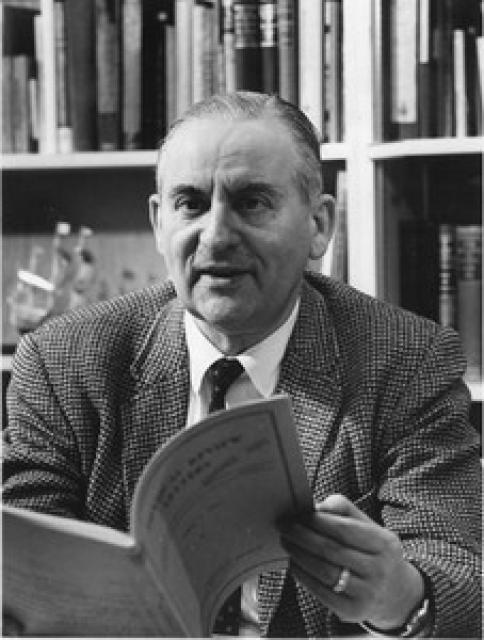
From 1951, he served as editor of the "Physical Review" journal, overseeing its relocation from the University of Minnesota to Brookhaven. He also played a key role in establishing the prestigious "Physical Review Letters" in 1958.
Legacy and Personal Qualities
Goudsmit passed away on December 4, 1978, in Reno, Nevada. He is widely regarded as a brilliant physicist who made significant contributions to quantum mechanics, atomic and nuclear physics, and the understanding of electron spin.
Colleagues and contemporaries described Goudsmit as a highly passionate individual with a strong sense of justice and a genuine belief in scientific freedom. His intuitive nature and deep knowledge of experimental data allowed him to unravel complex scientific puzzles.