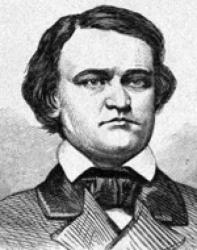
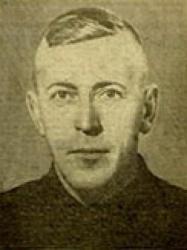
Samuil Bubnovsky
- Revolutionary and Statesman: The Life of Samuil Bubnovsky
- "Process of 270" and Imprisonment
- International Outcry and Release
- Founding of the Moldavian ASSR
- Career in the Moldavian Soviet Republic
- Education and Industrialization
- Repression and Execution
Revolutionary and Statesman: The Life of Samuil Bubnovsky
Early Life and Revolutionary ActivismBorn into a family of bakers in Chişinău, Samuil Bubnovsky (1897-1937) completed his secondary education in his hometown. His involvement in the revolutionary movement began in 1917, and he became a member of the Communist Party in 1919.
Bubnovsky played a pivotal role in the left-wing of the Socialist Youth Union of Bessarabia and rose to become its leader. In December 1919, he was appointed Secretary of the Bessarabian Regional Committee of the Communist Youth League (Komsomol). He subsequently joined the Bessarabian Committee of the Russian Communist Party (Bolsheviks).
"Process of 270" and Imprisonment
Bubnovsky's involvement in the Communist Party extended beyond Bessarabia. In March 1921, he became a member of the Provisional Central Committee of the Communist Party of Romania. However, his activism led to his arrest and torture in April 1921.
International Outcry and Release
Together with Pavel Tkachenko, Bubnovsky was accused in the infamous "Process of 270." The trial sparked international outrage, with prominent figures such as Alexandru Dobrojanu-Gherea condemning the baseless charges. Pressure from the global community forced Romanian authorities to release most of the accused, including Bubnovsky and Tkachenko.
Founding of the Moldavian ASSR
Bubnovsky played a key role in the establishment of the Moldavian Autonomous Soviet Socialist Republic (Moldavian ASSR). He was one of the signatories of a petition to the Central Committee of the Russian Communist Party demanding its creation. After the Moldavian ASSR was formed, Bubnovsky became its Secretary of the Republican Revolutionary Committee.
Career in the Moldavian Soviet Republic
At the First Congress of Soviets of Moldova, Bubnovsky was elected Secretary of the Central Executive Committee of the Moldavian ASSR. He later held the positions of Deputy Chairman of the Council of People's Commissars and Chairman of the State Planning Committee of the republic. From April 1927, he concurrently served as People's Commissar for Trade.
Education and Industrialization
With the onset of industrialization, Bubnovsky was sent to study at the Leningrad Polytechnic Institute, graduating in 1932. During his studies, he was elected a member of the Vyborg District Committee of the Communist Party and a deputy of the Vyborg District Council of Leningrad.
Repression and Execution
Bubnovsky's promising career came to an abrupt end in 1937 when he was arrested and executed during the Great Purge. In 1968, a street in the Rîşcani district of Chişinău was named after Bubnovsky. However, after the collapse of the Soviet Union, the street was renamed in honor of Matei Basarab, a 17th-century Wallachian prince.