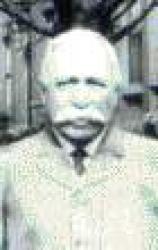
Samuil Greyg
 Russia
- Samuel Alexeyevich Greig: Financier and Military Leader
- Financial Leadership
- Financial Challenges and Policies
- Borrowing and Monetary Policy
- Resignation and Legacy
Samuel Alexeyevich Greig: Financier and Military Leader
Early Life and Military CareerSamuel Alexeyevich Greig was born in 1827 into a renowned Russian naval family. As a descendant of distinguished admirals, he embarked on a military career, serving in the elite Imperial Guard. In the Crimean War (1853-1856), Greig participated in the defense of Sevastopol, where he sustained a head injury at the Battle of Inkerman.
Financial Leadership
Following the war, Greig dedicated himself to public service within the financial realm. In 1866, he was appointed Deputy Minister of Finance. His expertise and understanding of international finance led him to be dispatched abroad in 1869 to study the latest financial institutions. In 1874, he became State Comptroller, and in 1877, he reached the pinnacle of his financial career as Minister of Finance.
Financial Challenges and Policies
Russia's finances were in dire straits after the Russo-Turkish War (1877-1878). Greig's tenure was marked by a series of economic difficulties, including the need to liquidate war expenses and the outbreak of the Caspian War and the Vetlyansk plague. To address these challenges, he implemented a wide range of revenue-raising measures, including taxes on high-speed passenger and freight services, excise duties on vodka and beer, and increased tariffs on insurance and stamps.
Greig also attempted to curb government spending, advocating for a reduction in expenditures. However, his efforts proved largely unsuccessful, as previous spending review commissions had also failed to achieve significant reductions.
Borrowing and Monetary Policy
To cover the budget deficit, Greig resorted to issuing loans. He raised funds through the Second Eastern Loan, Third Eastern Loan, and Sixth 4% Consolidated Loan. While some of the proceeds were used to reduce the circulation of credit rubles, further emissions were subsequently issued.
Resignation and Legacy
In 1880, Greig was dismissed from his post as Minister of Finance but remained a member of the State Council. His tenure left a mixed legacy. While his revenue-raising measures helped stabilize government finances, his lack of a cohesive economic program and his reliance on borrowing ultimately contributed to Russia's ongoing fiscal challenges. Nonetheless, Samuel Alexeyevich Greig remains an important figure in the history of Russian finance, embodying the military-bureaucratic tradition that influenced the country's economic policies during the 19th century.