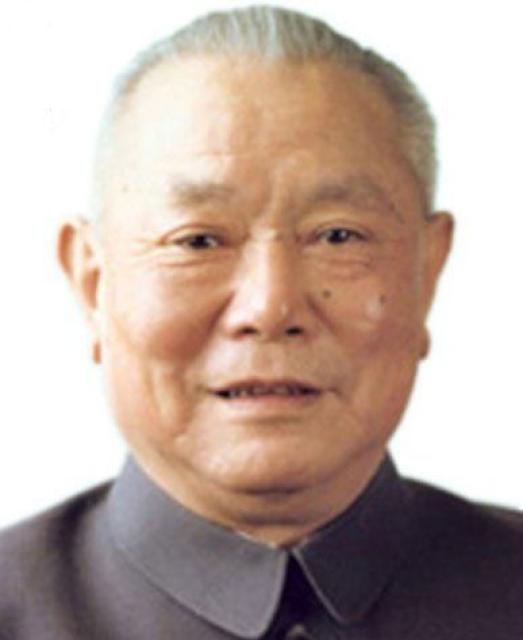
Saninyn Li
 China
China- Li Xiannian: A Revolutionary Leader and Statesman
- Wartime Service and Leadership
- Post-Liberation Roles
- Political Ascendancy and Challenges
- Reform Era and Post-Mao Leadership
Li Xiannian: A Revolutionary Leader and Statesman
Early Life and Revolutionary CareerLi Xiannian was born on June 23, 1909, into a peasant family in Hubei Province. From a young age, he experienced the hardships of rural life. In 1927, at the age of 18, Li joined the Chinese Communist Party (CCP). He led the "Mahuang Autumn Harvest Uprising" and became Secretary of the CPC's Huang'an County Committee and Chairman of the Huang'an County Workers' and Peasants' Revolutionary Government.
After 1931, Li served as Political Commissar of the 4th Detachment of the Chinese Workers' and Peasants' Red Army. In 1935, he joined the "Great Expedition" with his detachment, attacking and seizing western Sichuan Province. In 1936, Li's detachment crossed the Yellow River and joined the Western Army.
Wartime Service and Leadership
Throughout 1937, the Western Army fought its way to Xinjiang and arrived in Yan'an. During the Second Sino-Japanese War, Li was appointed Commander of the Hubei-Henan Column, which fought in various regions of Hubei, Anhui, and Henan Province. In 1941, he became Commander of the 5th Division of the New Fourth Army.
Li distinguished himself in 1942 by successfully withdrawing his division from an enemy encirclement. At the Seventh National Congress of the CCP in 1945, he was elected to the Central Committee. Later that year, he was appointed Commander of the Hubei-Henan Military Region and then Commander and Political Commissar of the Central Plains Military Region.
Post-Liberation Roles
After the establishment of the People's Republic of China in 1949, Li held various positions, including Commander of the Hubei Military Region, Secretary of the CPC Hubei Provincial Committee, and Chairman of the Hubei Provincial People's Government. He also served as Secretary of the CPC Wuhan Municipal Committee and Mayor of Wuhan.
In 1954, Li was appointed Vice Premier of the State Council, a position he held until 1980. Simultaneously, from 1973 onwards, he served as Minister of Finance.
Political Ascendancy and Challenges
Li Xiannian was re-elected to the Politburo of the CCP from the 8th to the 12th Congresses. In 1958, he became Secretary of the Secretariat of the CCP. In 1964, he visited Albania and participated in negotiations with foreign leaders.
During the Cultural Revolution, Li faced criticism for his financial policies. However, he received support from Zhou Enlai and Jiang Qing, who defended him as a repentant comrade.
Reform Era and Post-Mao Leadership
After the demise of the "Gang of Four," Li Xiannian's political influence grew. He participated in numerous negotiations with foreign leaders and delegations.
In June 1983, Li was elected Chairman of the People's Republic of China by the Sixth National People's Congress. In April 1988, he became Chairman of the Chinese People's Political Consultative Conference.
Li Xiannian was known as one of the "Eight Immortals of the CCP" and played a pivotal role in China's economic development and diplomatic relations. He died in Beijing on June 21, 1992, at the age of 82.