Santiago Solares
 Spain
Spain- Early Life and Socialist Activism
- Imprisonment and Prison Rebellion
- Spanish Civil War and Communist Party Involvement
- Rise to Leadership of the Communist Party
- Expulsion from the Communist Party and Later Life
Early Life and Socialist Activism
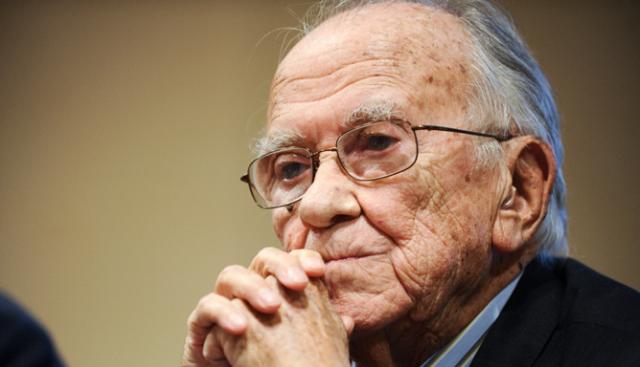
Santiago Carrillo was born in Gijón, Asturias, on January 18, 1915, to a prominent socialist family. His father, Wenceslao Carrillo, was a member of the Spanish Socialist Workers' Party, and his mother, María Rosalía Solares, was a devout Catholic. In 1921, the family moved to Madrid, where Santiago attended school and became involved in socialist youth organizations.
At the age of 17, Carrillo joined the Socialist Youth and began working for the party's newspaper, "El Socialista." He quickly rose through the ranks, becoming a member of the Socialist Union and Workers' General Union, and serving on the executive committee of the Socialist Youth.
Imprisonment and Prison Rebellion
Carrillo's involvement in leftist politics led to his imprisonment in 1934 for his participation in the failed Asturian Revolution. While in prison, he met with representatives of the Communist International Youth and began to bridge the gap between socialist and communist youth movements.
After his release from prison in 1936, Carrillo traveled to Moscow and facilitated the merger of the Socialist and Communist youth organizations into the Unified Socialist Youth. This move signaled a shift in Carrillo's political allegiances, as he grew disillusioned with the Socialist Party's moderate stance.
Spanish Civil War and Communist Party Involvement
With the outbreak of the Spanish Civil War in 1936, Carrillo joined the Communist Party. He held influential positions in the Madrid Defence Council during the siege of the city, where he allegedly ordered the execution of political prisoners. However, Carrillo denied any responsibility for these atrocities.
After the fall of Madrid in 1939, Carrillo fled to Paris and attempted to reorganize the Communist Party. He spent the next 38 years in exile, primarily in France, but also traveled to other countries.
Rise to Leadership of the Communist Party
Carrillo became General Secretary of the Communist Party in 1960. Under his leadership, the party strengthened its ties with the working class and intelligentsia, while distancing itself from other factions. After the Soviet invasion of Czechoslovakia, Carrillo began to gradually break away from Moscow's influence.
In 1976, Carrillo secretly returned to Spain, where he was arrested but later released. He was elected to the Spanish Congress of Deputies in 1977 and again in 1979. However, the failed military coup attempt of February 23, 1981, significantly weakened the Communist Party's position.
Expulsion from the Communist Party and Later Life
On April 15, 1985, Carrillo and his followers were expelled from the Communist Party. In 1986, he formed his own party, but it failed to gain significant support. Carrillo gradually withdrew from active political life and passed away at his home in Madrid on September 18, 2012.