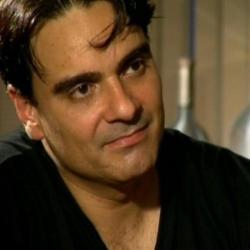
Scott Ritter
 USA
- Scott Ritter
- United Nations Weapons Inspector in Iraq
- Writer, Commentator and Public Figure
- Criminal Case and Personal Conduct
- Legacy
Scott Ritter
Early Life and Military ServiceWilliam Scott Ritter Jr. was born in 1961 in Gainesville, Florida, and grew up in a military family. His father served in the United States Army, and the family moved several times during his childhood. Ritter attended Franklin and Marshall College in Pennsylvania, where he studied the Soviet Union and international relations.
After graduating, Ritter joined the United States Marine Corps and became an intelligence officer. He worked on military analysis related to the Soviet-Afghan war and the Iran-Iraq War, and served during the 1991 Gulf War at U.S. Central Command headquarters in Saudi Arabia. His intelligence background and experience with weapons issues later shaped his work as an international inspector.
United Nations Weapons Inspector in Iraq
In 1991, Ritter joined the United Nations Special Commission, known as UNSCOM, the body established after the Gulf War to oversee the elimination of Iraq’s prohibited weapons programs. He spent seven years inspecting Iraqi sites and became a senior figure in the commission’s concealment investigations, a unit tasked with uncovering weapons and equipment that Iraqi authorities had not fully declared.
The work was politically charged and often confrontational. Iraq restricted access to some sites, while inspectors and governments debated how intrusive inspections should be and what intelligence could be used. Ritter became known for arguing that inspections had to be assertive and backed by the Security Council. In August 1998, after Iraq suspended cooperation and the international response drew his criticism, he resigned. He said the inspection mission was being undermined by a lack of resolve from the United States and other members of the Security Council.
Ritter’s resignation brought him into the center of a fierce debate over Iraq policy. He testified before Congress and wrote about his experiences, including in Endgame: Solving the Iraq Problem—Once and for All, published in 1999. His statements shifted over time as he assessed the available evidence and the effectiveness of inspections. In the years before the 2003 invasion, he argued that Iraq did not possess the active stockpiles of chemical and biological weapons alleged by advocates of war and warned that an invasion was not justified by the inspection record. The failure to find those stockpiles after the invasion gave renewed attention to his warnings.
Writer, Commentator and Public Figure
After leaving UNSCOM, Ritter became a frequent public commentator on U.S. foreign policy, arms control and the Middle East. He wrote several books, including Iraq Confidential and Target Iran, and made the documentary film In Shifting Sands: The Truth About UNSCOM and the Disarming of Iraq. His forceful style made him a familiar guest in media debates, where he challenged official accounts and criticized military intervention.
In later years, Ritter continued to publish commentary on international affairs, including the war in Ukraine and relations between Russia and the United States. His views have attracted both supporters who see him as a critic of intervention and skeptics who question his analysis and political alignments. In August 2024, federal agents searched his home in upstate New York. At the time, the search was reported as part of a broader investigation involving Americans with ties to Russian state media, and prosecutors had announced no charges against him in connection with that search.
Criminal Case and Personal Conduct
Ritter’s public reputation has also been shaped by a New York criminal case. In 2009, he was arrested after an online encounter with a person he believed to be a minor; the other party was an undercover law enforcement officer. Ritter maintained that he thought he was communicating with an adult. In 2011, a jury convicted him on six counts related to the encounter, including attempted criminal conduct involving a minor. He was sentenced to prison and served more than two years before being released. The conviction remains a serious part of his public record and has sharply affected how many people regard him, apart from his career in arms inspections and commentary.
Legacy
Ritter’s career has moved through military intelligence, international disarmament work, political advocacy and media commentary. His years with UNSCOM gave him firsthand experience of the challenges of inspecting a secretive weapons program, and his objections to the 2003 invasion became a central feature of his public profile. His record is also contested: he has drawn criticism for combative claims and political positions, while his criminal conviction has further complicated his standing. Taken together, those elements have made him a prominent and controversial voice in debates about Iraq, weapons inspections and American foreign policy.