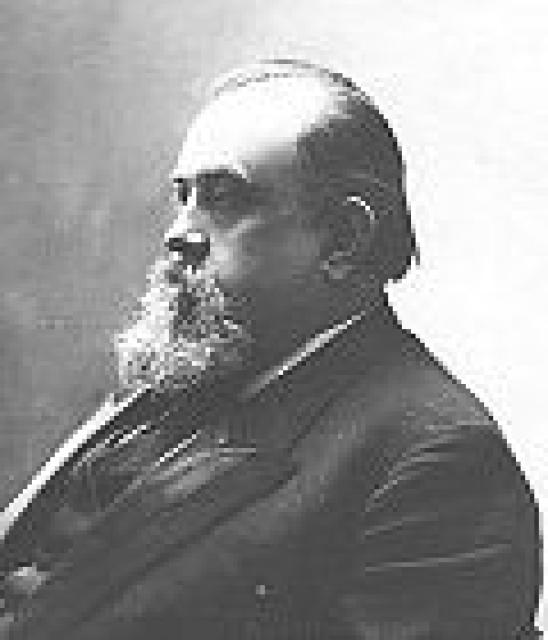
Semen Desnitskiy
 Russia
Early Life and Education
Semen Yefimovich Desnitsky was born around 1740 in an unknown location. He received his early education at the Trinity-Sergius Lavra Seminary before entering the law faculty of Moscow University.
In 1761, Desnitsky was sent by the Academy of Sciences to the University of Glasgow in Scotland for further studies in law. There, he earned a Master's degree in 1765 and a Doctorate of Law in 1767. His studies at Glasgow included lectures by the renowned economist Adam Smith.
Professor of Law
Upon returning to Russia in 1767, Desnitsky became the first Russian professor of law at Moscow University. He was known for being the first to deliver lectures in Russian, rather than Latin. Desnitsky taught Roman law and published several academic works, including "A Treatise on the Direct and Closest Way to Learn Jurisprudence" (1768) and "A Legal Argument on the Different Concepts of Property Ownership Among Nations in Different States of Society" (1781).
Legal and Social Philosophy
Desnitsky's legal philosophy was heavily influenced by Adam Smith and English jurisprudence. He opposed excessive punishments and advocated for public trials due to their educational value. In his 1781 speech "On the Different Concepts of Property Ownership Among Nations in Different States of Society," Desnitsky argued that the concept of property is fluid and varies depending on social circumstances.
Influence and Recognition
Desnitsky's work had a significant impact on the development of law and jurisprudence in Russia. He was a member of the Russian Academy of Sciences. His writings and lectures promoted the ideals of the Enlightenment and contributed to the growth of legal and social thought in the country.
Legacy
Semen Yefimovich Desnitsky passed away on June 15, 1789. He is remembered as a pioneer of Russian legal education and a proponent of Enlightenment values. His legacy as a scholar, jurist, and educator continues to inspire students and scholars of law today.




