Semen Paliy
 Ukraine
- Early Life and Military Exploits
- Alliance with Poland
- Growing Discontent and Rebellion
- Conflict with Poland and Alliance with Sweden
- Betrayal and Exile
- Rehabilitation and Return
- Legacy and Folklore
Early Life and Military Exploits
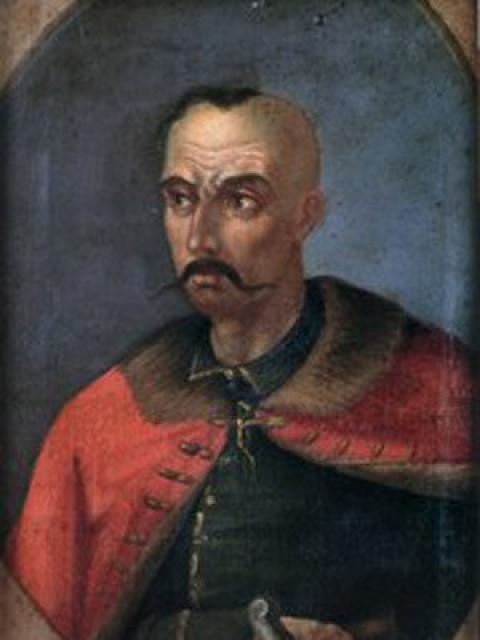
Semen Paliy, also known as Paley, was a Cossack colonel who played a significant role in 17th and 18th century Ukrainian history. Born in Borzna to a simple Cossack named Philip "Gurko," young Semen embarked on a military career in the Zaporozhian Sich. His valor earned him the nickname "Paliy," which translates to "burner."
Alliance with Poland
Around 1685, Paliy settled on the right bank of the Dnieper River. Polish King Jan Sobieski, seeking to fortify his borders against the Ottoman Empire, recruited Cossacks to establish a military presence in the area. Paliy was granted the town of Khvatovo in present-day Kyiv Oblast. In return, he pledged to defend Poland from Muslim incursions.
Growing Discontent and Rebellion
Paliy initially proved loyal to Poland, leading successful campaigns against the Tatars and sacking Ochakov. However, by 1688, he began to resent Polish control. He repeatedly petitioned Moscow to accept his territories, but the Russian government, wary of upsetting Poland, declined.
Conflict with Poland and Alliance with Sweden
King Augustus II, Sobieski's successor, saw no further need for Cossack forces in Poland after the war with Turkey. He issued decrees to disband Cossack units. Paliy, along with other colonels, revolted and seized control of several towns, including Bila Tserkva and Nemirov. They massacred Polish nobility and expelled Jews and Catholics.
Betrayal and Exile
At the behest of King Augustus II, Russia's Peter the Great demanded that Paliy surrender Bila Tserkva. Paliy refused, even as other colonels yielded. Hetman Ivan Mazepa, seeking to eliminate Paliy as a threat, falsely accused him of conspiring with the Swedes. Mazepa lured Paliy to his residence, arrested him, and sent him to Baturyn. In 1705, Paliy and his stepson, Symaszko, were exiled to Siberia.
Rehabilitation and Return
After Mazepa's betrayal was revealed, Paliy was exonerated and returned to Ukraine. He fought alongside loyal Cossacks at the Battle of Poltava, where he died shortly after.
Legacy and Folklore
Paliy's life, marked by continuous conflicts and his tragic fate, became a source of folk legend. Ukrainians celebrated him in songs, tales, and ballads as a champion of the people against oppressors. He was often portrayed as a supernatural being, a "characteristic," or sorcerer, possessing extraordinary abilities. The circumstances surrounding his arrest and exile inspired various accounts, including the belief that he was sent to a distant land "beyond the Pyskova Sea" to ride "like a nomad" on dogs.