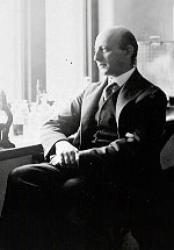
Sergey Gershenzon
 Ukraine
- Sergei Mikhailovich Gershenson: A Pioneer in Soviet Genetics
- Career in Genetics
- Pioneering Discoveries in Molecular Genetics
- Recognition and Legacy
Sergei Mikhailovich Gershenson: A Pioneer in Soviet Genetics
Early Life and EducationSergei Mikhailovich Gershenson was born on January 24, 1906, in Moscow, Russia, into a family of notable intellectuals. His father was Mikhail Osipovich Gershenson, a renowned Russian literary scholar and Pushkinist, while his mother was Maria Borisovna Goldenveizer, a pianist and sister of the famous pianist Alexander Borisovich Goldenveizer. Gershenson's early life was marked by a strong interest in science, particularly biology. Following his passion, he enrolled in Moscow University in 1922 and became a student of the renowned geneticist Sergei Sergeyevich Chetverikov.
Career in Genetics
After graduating from university in 1927, Gershenson began his career as a researcher at the K. A. Timiryazev Biological Institute. In 1935, he joined the Institute of Genetics under the USSR Academy of Sciences. In 1937, he relocated to Kiev at the invitation of Ivan Schmalhausen, the legendary Ukrainian evolutionary biologist. Schmalhausen had been appointed to head the newly established Institute of Genetics and entrusted Gershenson, a promising young candidate in biological sciences, with the leadership of his genetics laboratory.
During the tumultuous years of World War II, Gershenson's work was interrupted. He was drafted into the Red Army and served until the war's end in 1945. Upon his return to Kiev, he resumed his research and quickly made significant contributions to the field of genetics.
Pioneering Discoveries in Molecular Genetics
In the post-war years, Gershenson became increasingly interested in molecular biology and genetics. He established the Sector of Molecular Biology and Genetics at the Institute of Molecular Biology and Genetics, which he later expanded into a full department. In 1986, he joined the Institute of Plant Physiology and Genetics.
Gershenson's research led to groundbreaking discoveries that fundamentally changed our understanding of genetics. He identified the phenomenon of "jumping genes" and the process of reverse transcription, decades before these concepts were established by other scientists outside the Soviet Union. His work also provided compelling evidence for the mutagenic effects of thymus DNA on fruit flies, a finding that foreshadowed the Nobel Prize-winning research of Herman Muller in the United States.
Recognition and Legacy
Despite the pivotal nature of his discoveries, Gershenson's contributions were often overlooked by the international scientific community due to the constraints of the Soviet political climate. However, his brilliance and perseverance eventually gained recognition. In 1976, he was elected as a member of the Academy of Sciences of Ukraine. In 1990, he was awarded the title of Hero of Socialist Labor for his outstanding achievements.
Gershenson's legacy is etched in the annals of genetics. His pioneering work helped pave the way for subsequent advancements in the field and continues to inspire generations of scientists around the world. His unwavering pursuit of knowledge, despite the challenges he faced, serves as a testament to the power of intellectual curiosity and the transformative potential of scientific research.