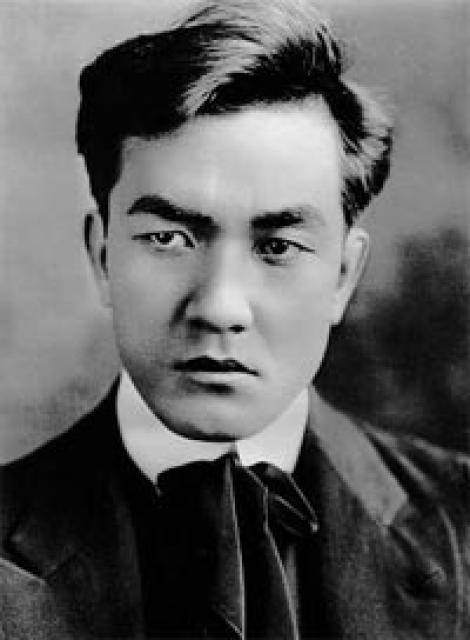
Sessue Hayakava
 USA
USA- Sessue Hayakawa: A Life in Film and History
- Early Life and Military Career
- Suicide Attempt and Spiritual Journey
- Arrival in the United States and Early Film Career
- Hollywood Success and Recognition
- Post-War Career and Legacy
- Filmography
Sessue Hayakawa: A Life in Film and History
Sessue Hayakawa (June 10, 1889 - November 23, 1973) was an American actor of Japanese descent. His remarkable life and illustrious career spanned multiple continents and decades, leaving an indelible mark on the history of cinema.
Early Life and Military Career
Born in Nanaura, Japan, Hayakawa hailed from a samurai family. He initially pursued a military career, attending the Japanese Naval Officer Academy. However, a diving accident left him with ruptured eardrums, prematurely ending his military aspirations.
Suicide Attempt and Spiritual Journey
At just 18 years old, Hayakawa attempted hara-kiri. After surviving, he spent several months recovering in a remote temple, living a life of solitude and contemplation. This transformative experience shaped his future path.
Arrival in the United States and Early Film Career
In 1909, Hayakawa traveled to the United States. He earned a bachelor's degree in arts from the University of Chicago in 1913. Together with his wife, Tsuru Aoki, he performed in the play "The Typhoon" in San Francisco. Their performance caught the attention of filmmaker Thomas Ince.
In 1914, Hayakawa starred alongside his wife in two major films directed by Ince: "The Wrath of the Gods" and "The Typhoon." He also appeared in the 1913 film "The Battle of Gettysburg."
Hollywood Success and Recognition
Hayakawa's charismatic presence and exotic features made him a sought-after actor in Hollywood. He starred in numerous silent and sound films, portraying both Asian and non-Asian characters. In 1957, he received an Academy Award nomination for Best Supporting Actor for his role in "The Bridge on the River Kwai."
Post-War Career and Legacy
Following World War II, Hayakawa returned to Japan and continued his acting career. He also became involved in politics and education. In 1960, he was appointed to the Japanese House of Councillors.
Filmography
1912: His Nemesis1913: The Battle of Gettysburg
1914: The Typhoon
1914: Tokoragama
1914: The Wrath of the Gods
1914: The Last of the Line
1915: Temptation
1915: The Cheat
1919: The Gray Horizon
1937: Yoshiwara
1949: Tokyo Joe
1955: House of Bamboo
1957: The Bridge on the River Kwai (Colonel Saito)
1959: Green Mansions
1960: Swiss Family Robinson
1966: The Daydreamer


