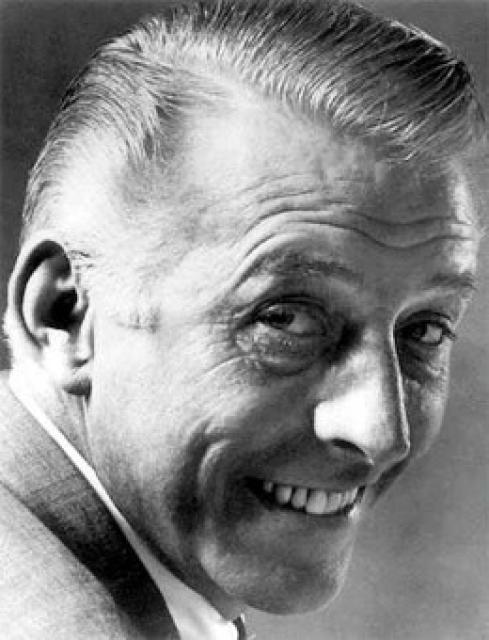
Stan Renton
 USA
USA- Early Life and Influences
- The Birth of an Orchestra
- Joining the Swinging Scene
- Progressive Jazz and Latin Influence
- Evolution and Expansion
- Breaking Boundaries
- Symphonic Jazz Fusion
- Legacy and Impact
Early Life and Influences
Stanley Newcomb Kenton was born on December 15, 1911, in Wichita, Kansas, a renowned jazz hub in the United States. His family later relocated to Los Angeles, where his musical journey began under the guidance of his mother, a talented pianist. By the age of ten, Kenton had mastered the piano and demonstrated a precocious talent for composing.
The Birth of an Orchestra
In the early 1930s, Kenton formed his first musical ensemble, which he simply referred to as an "orchestra" despite the common usage of the term "band" in club advertisements. His repertoire consisted primarily of original compositions, a hallmark of his subsequent bands.
Joining the Swinging Scene
In 1934, Kenton ascended to the ranks of prominent jazz groups. He established his first professional swing big band in 1941.
Progressive Jazz and Latin Influence
Collaborating with Pete Rugolo in 1946, Kenton pioneered experimental arrangements for brass, trombone, and saxophone sections, which became the foundation of "progressive jazz" and paved the way for Latin jazz.
Evolution and Expansion
Throughout the 1950s, Kenton seamlessly blended symphonic and Latin jazz with elements of bebop. His orchestra expanded and transformed, featuring renowned musicians such as Maynard Ferguson, Conte Candoli, Shelly Manne, Frank Rosolino, Stan Getz, Eddie Saffranski, Chico Alvarez, Kai Winding, Lee Konitz, and Art Pepper, as well as vocalist June Christy. The band's size eventually reached a record-breaking 40 members.
Breaking Boundaries
Despite declining interest in swing after World War II, Kenton's innovative arrangements, audacious experiments, and the incorporation of wind instruments typical of symphony orchestras sustained his group's popularity. His vision was to elevate jazz big bands from mere dance accompaniments to the realm of concert performances, a groundbreaking concept that paved the way for the genre's acceptance in classical music venues.
Symphonic Jazz Fusion
After European tours in the 1960s, Kenton delved deeper into merging jazz and classical music, recording 25 arrangements of Richard Wagner. While the album received limited acclaim, it showcased his unwavering dedication to musical experimentation.
Legacy and Impact
Stan Kenton passed away in 1979 from complications of a severe head injury. His pioneering innovations revolutionized big band jazz and opened a new era of symphonic expression within the genre. His legacy as a visionary musician and tireless experimenter continues to inspire and captivate audiences around the world.


