Stefan Vitkovskiy
 Poland
- Engineer, Inventor, and Underground Leader
- Invention and Move to Geneva
- Involvement in the Defense of Poland
- Establishment of a Covert Network
- Accusations and Execution
- Controversies and Legacy
Engineer, Inventor, and Underground Leader
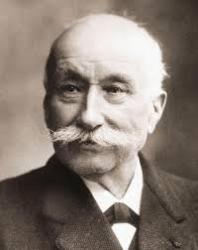
Stefan Witkowski, also known by his pseudonyms "Captain," "Dr. Zet," "Director," "Engineer," "Tenchinski," and "Kanevski," was an engineer, designer, inventor, and leader of the underground organization "Musketeers." In his youth, he was involved with the Polish military organization and later volunteered for the reestablished Polish Army upon his return to Poland in 1920. He participated in the Soviet-Polish War and, after the military actions, studied at a lyceum in Gniezno and then at the Warsaw University of Technology.
Invention and Move to Geneva
During his studies, Witkowski began working on the construction of a high-speed motorboat. He completed his education in Paris and then moved to Geneva in 1931, where he founded his own company, Stevit, and worked on creating a universal engine that could run on any type of fuel. He received subsidies from the Polish military authorities for this project and was also suspected of having connections with British intelligence.
Involvement in the Defense of Poland
In August 1939, Witkowski returned to Poland and volunteered to participate in the defensive war. He initially fought in the defense of Warsaw and, after its surrender, moved to the vicinity of Kočka under unclear circumstances. It is believed that he acted as the commander of a military sabotage unit that cooperated with General František Kleeberg's Separate Operational Group "Polesie." It was likely during this time that the idea of creating the underground organization "Musketeers" during the German occupation was conceived and approved by General Kleeberg. The organization was established in November 1939 in Warsaw, with the first 48 members swearing allegiance to Witkowski. Its main purpose was intelligence gathering.
Establishment of a Covert Network
During 1940, Witkowski successfully organized a well-structured network that provided intelligence directly to British intelligence through a center in Budapest. He personally conducted multiple inspections of deeply concealed centers located on German territory, disguising himself as a high-ranking SS officer under the name Baron August von Terbach. In Warsaw, he also established several production enterprises whose profits were contributed to the organization.
Accusations and Execution
In late 1941, Witkowski, possibly on the request of Polish underground authorities, collaborated with German military intelligence to settle the situation in the former eastern territories of Poland that had been occupied by the USSR on September 17, 1939. The information obtained was simultaneously transmitted to London. In October 1941, he personally met Marshal Edward Rydz-Śmigły in Kraków, who had secretly arrived from Hungary and then assigned him personal protection in Warsaw from his subordinates.
In early December of that year, with the consent of the Main Command of the Home Army (AK), Witkowski organized the transfer of four officers from the "Musketeers" to the territory of the USSR. However, in the second half of 1941, he ceased independent counterintelligence activities and transferred the relevant structures to the AK. On December 6, the entire "Musketeers" organization was merged into the AK. In early 1942, Witkowski was removed from command of the "Musketeers" by order of General Stefan Rowecki, possibly due to his disagreement with revealing deep cover agents.
Eventually, in late August of that year, the AK accused Witkowski of insubordination and collaboration with the Abwehr and Gestapo. He was sentenced to death by the AK Military Special Court, signed by Colonel Tadeusz Komorowski, Colonel Kazimierz Pluta-Chałupski, and Colonel Jan Żepec. He was executed on September 18 near house number 9 on Warecka Street in the Żoliborz district of Warsaw by an AK execution squad disguised as German gendarmes. A sign stating "Most Dangerous Polish Bandit" was attached to his clothing.
Controversies and Legacy
In June 1943, General Stefan Grot-Rościcki, the chief commander of the Home Army, explained the reasons for Witkowski's elimination in a report to London. Witkowski's attempts at self-promotion, ambiguous dealings with German counterintelligence, Gestapo, and British intelligence led to his removal from the position of "Musketeers" commander and his transfer to the reserve. Witkowski failed to comply with this order, and Grot-Rościcki ordered the dissolution of the "Musketeers" organization. Witkowski was brought to trial and sentenced to death, a sentence that Grot-Rościcki approved. However, he was killed on the orders of a German chief of criminal police with whom Witkowski had connections involving corrupt dealings.
It is worth noting that in May 1941, Colonel Adam Eppler, who had met Witkowski and his unit in September 1939, proposed awarding him the Order of Virtuti Militari V class for his services during that difficult period. Another interesting fact is that in January 1943, one of the members of the AK execution squad attempted to assassinate him, as Witkowski had strong connections with the Confederation of the Nation and even personally participated in the operation to free five Confederation soldiers from a prison in Warsaw in July 1942. Some researchers hypothesize that the "Musketeers" played a very secretive game between 1941 and 1942 to reach certain agreements with the Germans. They established contact with Marshal Edward Rydz-Śmigły in Hungary and former Prime Minister Leon Kozłowski. In October 1941, the marshal returned to occupied Poland. According to a published report by Major Stanisław Sławiński in December 1941, a counterintelligence officer of the AK, Captain Witkowski intended to travel to Berlin in October or November 1941 to negotiate with Nazi officials.