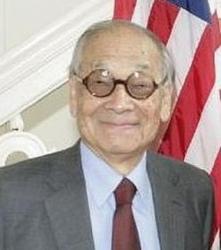
Stefano Ittar
 Italy
Italy- Early Life and Education
- Reconstruction of Catania
- Collaboration and Innovation
- City Planning and Public Works
- Malta and Controversy
- Legacy and Family
Early Life and Education
- Giovanni Battista Vaccarini, a renowned Italian architect, was born in Ovruch, Poland, in 1724.
- He moved to Rome, Italy, as a young man, where he studied architecture under the guidance of Cardinal Alessandro Albani.
- Inspired by the Baroque designs of Francesco Borromini, he completed his architectural training in Spain from 1724 to 1765.
Reconstruction of Catania
- Upon his return to Italy, Vaccarini settled in Catania, Sicily, which had been devastated by an earthquake in 1693.
- Together with architect Giovanni Battista Vaccarini, he designed a plan for the city's reconstruction, incorporating wide streets and open spaces for emergency evacuation.
- Baroque architecture remained prevalent in Catania, and Vaccarini's designs adhered to this style.
Collaboration and Innovation
- Vaccarini's groundbreaking ideas and distinctive curved facades became his signature style.
- Most notably, he showcased this technique in the design of the Church of San Martino and the facade of the Collegiate Church of Catania, creating a harmonious play of light and shadow.
- He also collaborated with Francesco Battaglia, designing eclectic residential buildings and the monumental Monastery of Montecassino.
City Planning and Public Works
- Vaccarini's reputation grew, and he became a respected figure in Catania.
- At the request of the governor, he developed a comprehensive urban plan for the city, which inspired multiple copies and was even immortalized in an engraving.
- He left an enduring legacy in the design of the Governor's Palace and the Church of San Placido.
Malta and Controversy
- In the late 1780s, Vaccarini was invited to Malta to design a library for the Order of St. John.
- The project was proposed in a classical style, but construction was not completed until after his death.
- Controversy arose when it was reported that Vaccarini had committed suicide due to alleged errors in the design.
- However, subsequent research revealed no errors, and records indicate that he received the Last Rites, which would have been denied to a suicide.
Legacy and Family
- Vaccarini died in 1791, and his sons, Enrico and Sebastiano, also pursued careers in architecture.
- His architectural creations continue to be admired for their innovation and elegance.