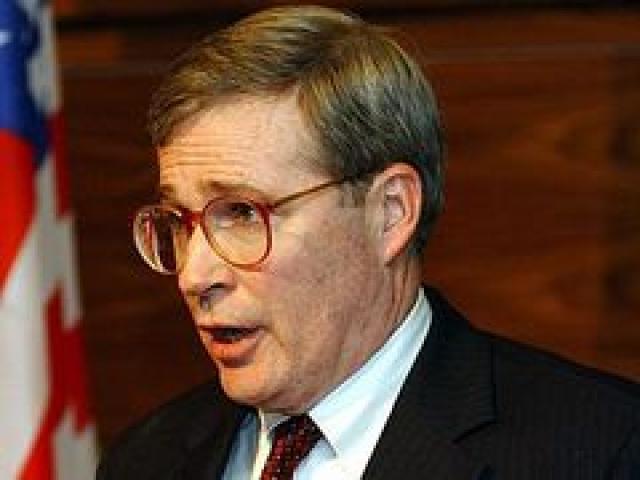
Stephen Hadley
 USA
USABiography of Stephen Hadley
Stephen John Hadley was born on February 13, 1947, in Toledo, Ohio, USA. He grew up in a family of an electrical engineer and a homemaker. Hadley completed his education at Charles F. Brush High School in Lindhurst, Ohio, where he served as the chairman of the student council. In 1969, he graduated from Cornell University with a bachelor's degree. He then attended the Yale Law School, where he met Hillary Rodham, the future First Lady of the United States and Senator from New York. In 1972, Hadley completed his law studies and received a Doctor of Law degree.
After his graduation from Yale, Hadley was called to serve in the US Navy. From 1972 to 1974, he worked in the analytical group of the Department of Defense's inspector general's office. From 1974 to 1977, during the administration of President Gerald Ford, Hadley engaged in analytical work at the National Security Council of the United States.
In 1977, Hadley left government service and joined the Washington law firm Shea & Gardner. He worked intermittently at the firm until 2001 and eventually became a partner. In 1986, President Ronald Reagan appointed Hadley as the legal counsel to Senator John Tower's commission, which investigated the illegal arms sales to Iran (known as the Iran-Contra scandal). He served in this capacity until 1987.
During George H.W. Bush's administration from 1989 to 1993, Hadley held the position of Assistant Secretary of Defense for International Security. He was responsible for NATO and Western Europe policy, nuclear weapons, missile defense, and arms control. As a representative of Secretary of Defense Richard Cheney, Hadley participated in American-Soviet and American-Russian negotiations that led to the signing of the START I and START II treaties.
During the 2000 presidential campaign, Hadley served as one of the advisors to Texas Governor George W. Bush. The group of foreign policy and national security experts who advised Bush, including Hadley, gained prominence as "The Vulcans." After Bush's victory, Hadley worked in his transition administration.
By 2000, in addition to his legal practice at Shea & Gardner, Hadley also worked at The Scowcroft Group, a consulting firm led by former National Security Advisor Brent Scowcroft. In 2001, Hadley became Deputy National Security Advisor to Condoleezza Rice and was appointed Assistant to the President. He first gained significant media attention in the summer of 2003 when he took responsibility for the false information contained in the President's annual State of the Union address. Hadley admitted that it was his oversight that led to the inclusion of the inaccurate intelligence about Saddam Hussein's attempts to obtain uranium in Niger. This incident sparked the investigation into the Valerie Plame affair, in which the Bush administration was suspected of leaking information about CIA agent Valerie Plame, whose husband, Joseph Wilson, had previously debunked the claim about "African uranium."
In November 2004, when Condoleezza Rice was appointed Secretary of State, Hadley was chosen by President Bush as her successor. He officially assumed the position of National Security Advisor on January 26, 2005. Hadley was regarded as Rice's right-hand man and seen as a testament to the consolidation of US foreign policy under the new Secretary of State. Observers noted his unwavering loyalty to President Bush and considered him the least independent National Security Advisor in recent US history. Hadley readily acknowledged Rice's primacy and rejected the idea of competing with her for influence.
In March 2006, Hadley unveiled a new version of the "National Security Strategy" of the United States. It was based on the same idea of preemptive strike that served as the main component of the so-called "Bush Doctrine," which emerged after the September 11, 2001, terrorist attacks.