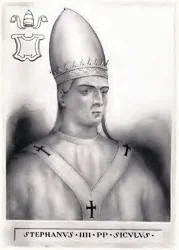
Stephen VI
Stephen VI’s brief pontificate unfolded during a turbulent struggle over who would control Rome and the imperial title. He is remembered above all for the so-called Cadaver Synod, a trial in which his predecessor, Pope Formosus, was exhumed and condemned after death. The spectacle became one of the most notorious episodes in medieval papal history, though it was also a political act shaped by rival factions.
From bishop to pope
Little is known about Stephen’s early life, including his birth date. Before becoming pope, he served as bishop of Anagni, a town southeast of Rome. He was elected in 896, following the very short pontificate of Boniface VI. His reign came during a period when the papacy was entangled in disputes among powerful Italian families and competing claimants to the imperial crown.
Formosus, Stephen’s predecessor, had crowned Arnulf of Carinthia emperor in 896, challenging the interests of the Spoletan dynasty. After Arnulf left Italy, Lambert of Spoleto and his mother, Ageltrude, regained influence in Rome. Stephen’s allegiances shifted amid these changing fortunes, and his actions against Formosus were closely tied to the political question of which ruler’s claim to power should be recognized.
The Cadaver Synod
In January 897, Stephen convened a synod in Rome and ordered Formosus’s body to be dug up. Dressed in papal robes, the corpse was placed in a chair and subjected to a posthumous trial. A deacon reportedly answered questions on behalf of the dead pope. The synod declared Formosus’s election invalid and annulled his acts and ordinations.
After the judgment, accounts say the papal vestments were stripped from the corpse and fingers used for blessings were cut off. The body was first buried in a common grave and later thrown into the Tiber. The shocking proceedings were intended to erase Formosus’s authority and undo the consequences of his decisions, but they intensified opposition to Stephen and further damaged the prestige of the papacy.
Fall and aftermath
Stephen was imprisoned later in 897 and died in captivity, probably by strangulation. His exact date of death is uncertain, but it is generally placed in the summer of that year. A successor soon convened another synod that reversed the verdict against Formosus and restored the validity of his ordinations. In later years, however, the controversy returned, as rival factions continued to dispute how Formosus’s legacy should be treated.
Because an earlier pope named Stephen had been elected but never consecrated, this pontiff is sometimes numbered Stephen VII in older histories, though Stephen VI is the usual modern form. His reputation has been dominated by the grotesque courtroom scene, but the episode also reflects the instability of late ninth-century Rome, where papal decisions could determine imperial legitimacy and political factions fought to control the church’s highest office.