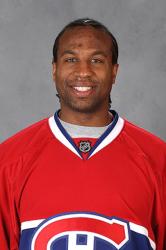
Steve Bernier
 Canada
- A junior standout in Moncton
- First-round selection and NHL arrival
- New Jersey and the 2012 Final
- A productive stretch with the Devils
- From player to mentor
Steve Bernier’s hockey career moved from a dominant junior run in Quebec to more than a decade in professional hockey, with stops across six NHL teams. Drafted in the first round by San Jose, the powerful right winger became known for his size, scoring touch and net-front presence. His path included a memorable run to the Stanley Cup Final with New Jersey, a difficult penalty in the final game, and a return to the junior club that first gave him his start as a player-development coach.
A junior standout in Moncton
Born in Quebec City on March 31, 1985, Bernier was selected first overall by the Moncton Wildcats in the 2001 Quebec Major Junior Hockey League draft. He spent four seasons with the club, developing into one of its most productive forwards. Across 271 games, he recorded 313 points, including 151 goals.
His junior career earned him league recognition, including All-Rookie Team honors in 2002 and Second All-Star Team selections in 2003 and 2004. His combination of strength, shot and ability to work around the crease made him an appealing prospect for NHL teams.
First-round selection and NHL arrival
The San Jose Sharks chose Bernier 16th overall in the 2003 NHL Entry Draft. He continued with Moncton before making his NHL debut with the Sharks in 2005. In his first NHL season, 2005–06, he scored 14 goals and 13 assists in 39 games, a promising start for a young power forward.
Bernier played three seasons in San Jose before a series of trades moved him through Buffalo, Vancouver and Florida. In Vancouver’s 2008–09 season, he played all 81 games, contributing 15 goals and 16 assists. He later joined the Florida Panthers and then the New Jersey Devils, where he found a longer-term home.
New Jersey and the 2012 Final
Bernier’s most visible postseason moment came in the 2012 Stanley Cup Final. The Devils reached the championship series against the Los Angeles Kings, and Bernier contributed during their playoff run as a physical depth forward. In Game 6, with New Jersey trailing in the first period, he hit Kings defenseman Rob Scuderi from behind and received a five-minute major for boarding and a game misconduct.
Los Angeles scored three power-play goals during the penalty and went on to win 6–1, clinching the franchise’s first Stanley Cup. The sequence became a defining image of the game, and Bernier faced public blame for a defeat shaped by the entire team’s performance. The Devils and their supporters also recognized his contributions in helping them reach the Final; the penalty did not end his NHL career.
A productive stretch with the Devils
Bernier remained with New Jersey for several seasons and delivered his best NHL offensive numbers in 2014–15, tying career highs with 16 goals and 32 points. He later signed with the New York Islanders, splitting his time between the NHL and the American Hockey League’s Bridgeport team.
His NHL career spanned 637 regular-season games, in which he totaled 105 goals and 125 assists. Beyond the Islanders, his NHL stops included the San Jose Sharks, Buffalo Sabres, Vancouver Canucks, Florida Panthers and New Jersey Devils.
From player to mentor
Bernier continued in the AHL with Bridgeport through the 2019–20 season. In 2021, he returned to Moncton in a player-development role, helping guide young Wildcats using the experience he had gained across junior hockey, the NHL and the AHL.
The transition brought his story back to its beginning. The teenager drafted first overall by Moncton returned as a mentor to prospects hoping to follow a similar path. His career remains a portrait of a productive professional forward: a junior star who reached the NHL, adapted to changing roles and eventually passed his knowledge on to the next generation.