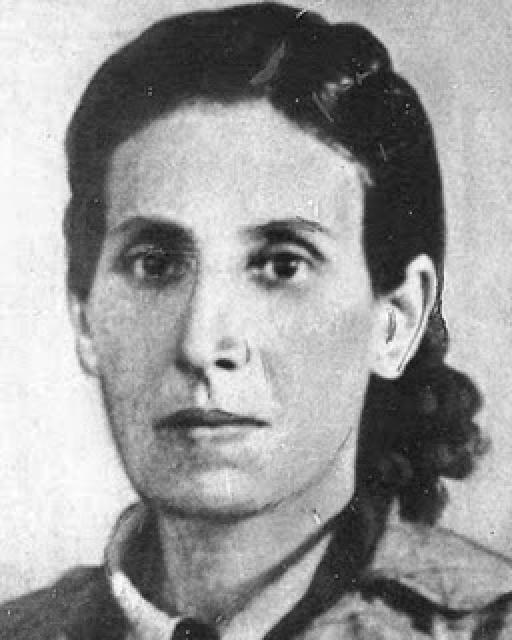
Styllou Pantopiou Christofi
- The Mysterious Case of Styllou Pantopiou Christofi
- Early Life and Tragedy
- Domestic Dispute and Murder
- Investigation and Trial
- Aftermath and Legacy
The Mysterious Case of Styllou Pantopiou Christofi
A Controversial ExecutionStyllou Pantopiou Christofi became one of the last women to be executed in Britain when she was hanged in 1954 for the murder of her daughter-in-law. Her case remains shrouded in controversy, with questions about her guilt and the fairness of her trial.
Early Life and Tragedy
Born in Cyprus in 1900, Styllou Christofi faced tragedy early on when she was accused of murdering her mother-in-law in 1925. She was found guilty but later acquitted and released. In 1953, she traveled to the United Kingdom to visit her son, Stavros, who had been estranged from her for twelve years.
Domestic Dispute and Murder
Stavros was a waiter in London and had married a German woman named Hella, with whom he had three children. Styllou reportedly did not get along with Hella, and on the night of July 29, 1954, she struck her with a frying pan. She then strangled Hella and dragged her body into the garden to dispose of it.
Christofi poured kerosene on the body and set it alight. A neighbor witnessed the incident but did not realize what was burning in the yard. Speaking broken English, Styllou ran into the street to raise the alarm, stopping a passing car and saying, "Please help. We are burning. The children are sleeping."
Investigation and Trial
When the police arrived at the scene, bloodstains found in the house immediately raised suspicion. Christofi's explanation that she had found Hella on fire and tried to put out the flames was not believed. She was charged with murder and put on trial at the Old Bailey on October 28, 1954.
The defense relied on the argument of insanity, but the jury rejected it. Styllou Christofi was sentenced to death and hanged at Holloway prison by renowned hangman Albert Pierrepoint on December 13, 1954.
Aftermath and Legacy
In her last request, Christofi asked for a Maltese cross to be hung on the wall of her cell during the execution. It remained there until the cell was dismantled in 1967. In his biography, "Executioner: Pierrepoint," Albert stated that Christofi failed to attract much media attention or sympathy because, unlike the glamorous Ruth Ellis, she was not as appealing. The blonde showgirl was far more captivating than the "gray-haired, incoherent old grandmother who could not speak English."
Christofi's body was buried in an unmarked grave within the grounds of Holloway prison, as was customary. In 1971, the prison underwent extensive rebuilding, during which the remains of all the executed women were exhumed. With the exception of Ruth Ellis, the remains of four others – Styllou Christofi, Edith Thompson, Amelia Sach, and Annie Walters – were reburied in a single grave at Brookwood Cemetery in Surrey.
British artist Freddie Robins included the home where the Christofi family lived in her unusual knitting project, "Knitted Homes of Crime," alongside the house of Ruth Ellis. Styllou Pantopiou Christofi's case continues to be debated and studied, offering a glimpse into a complex and controversial era of British criminal justice.


