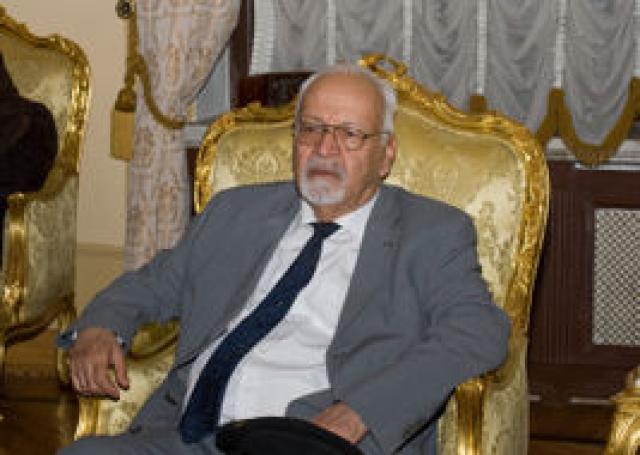
Suleyman Laek
 Afghanistan
Biography of Suleiman Laek
Suleiman Laek, an Afghan poet and statesman, was born into a prominent family in Afghanistan. His father, Maulavi Abdul Gani, belonged to the Suleimankhel tribe of the Ghilzai Pashtuns and was a representative of the prominent Mujaddedi family, who were leaders of the Nakshbandi Sufi order. His mother came from the Haroti tribe of the Ghilzai Pashtuns. Laek's influential brother-in-law, Sebghatullah Mujaddedi, was married to his older sister, Merhnegor. However, due to his repeated exposés against Sebghatullah, Laek was declared an enemy of the clan, as stated by former Commander of the 40th Army, General Boris Gromov. This is the logic of any revolution, especially when it occurs in the East - brothers are forced to fight against brothers, and fathers against sons.
Laek completed his education at Habibia High School in Kabul in 1947 and then attended the religious school in Pagman, where he was expelled twice for "anti-religious statements." At the age of 12, he became acquainted with the works of Russian and French classics, including the poetry of Alexander Pushkin. From 1952 to 1954, he studied at the Shariah Faculty of Kabul University but was expelled for participating in student protests. He then studied at the Faculty of Literature at the same university, graduating in 1957.
Laek gained widespread recognition as a poet, writing in the Pashto and Dari languages. In 1959, he was awarded the State Prize for his poem "Lost Childhood." He authored several collections of poetry, including "Songs of Chungar" (1962), "The Nomad's Tent" (1976), "Memories and Fields" (1978), "The Sail" (1981), "Dawn over the Indus" (1983), and "Bright Direction of Roads" (also known as "Bright Path") (1984). His works combine lyrical and strongly expressed social motifs.
From 1958 to 1968, Laek held various positions in the media and government institutions, including working for the Kabul newspaper "Khewad," serving as Deputy Editor of Radio Afghanistan, Deputy Editor of the magazine "Zhwandun" ("Life"), Deputy Editor of the newspaper "Radio," and an employee of the Ministry of Culture. In 1965, he became a member of the People's Democratic Party of Afghanistan (PDPA) and a delegate to its founding congress. In 1966, he became a candidate member of the Central Committee of the party and was part of the "Parcham" faction. From 1968, he was the publisher and editor-in-chief of the newspaper "Parcham." In July 1977, he was elected a member of the Politburo of the Central Committee of the PDPA at a party conference that united the "Khalq" and "Parcham" factions.
After the PDPA came to power in 1978 through the Saur (April) Revolution, Laek became a member of the Revolutionary Council and Minister of Radio and Television. However, following the repression against members of the "Parcham" faction, he was removed from the Politburo and dismissed from his ministerial position. He wrote a repentant article but was arrested in March 1979 and imprisoned in Pul-e-Charkhi. He later reflected on this period of his life, stating that all his friends turned away from him, and only his poems remained, giving him strength and solace in the depths of hell. While in prison, he continued to write poetry, with 42 poems from his "prison cycle" forming the collection "Flowers of Hell." He was released from prison in late December 1979 after the Soviet intervention in Afghanistan. From January 1980, he became a candidate member of the Central Committee of the PDPA and a member of the Revolutionary Council. From April 12, 1980, he served as the President of the Academy of Sciences of Afghanistan, and in 1986, he was awarded the title of academician in the field of language and literature. Simultaneously, he was appointed as the representative of the PDPA and the Revolutionary Council for the "East" zone in Jalalabad.
From June 1981, Laek served as the Minister for Nationalities and Tribes until February 1989. In the same year, he became a member of the Central Committee of the PDPA. From 1989 to 1990, he held the position of Minister for Border Affairs. He was a member of the Politburo of the Central Committee of the PDPA from 1986 to 1990 and the Secretary of the Central Committee of the PDPA from 1989 to 1990. From 1990 to 1992, he was a member of the Executive Board of the Central Council of the Fatherland Party (formerly the PDPA) and one of its deputy chairmen.
In addition to his political and poetic activities, Laek also studied the ethnography of Pashtun tribes. According to the memoirs of M.F. Slinkin, a specialist in the history and politics of Afghanistan and former Soviet advisor in the country in the 1980s, Laek gained immense respect not only among the tribes and nationalities of Afghanistan but also among all layers of the intelligentsia and ordinary Afghans. However, it is worth noting that the leadership of the party and the government had a complex relationship with him. Some idolized him and rightfully associated him with the most realistic solutions to the protracted Afghan crisis. Others, however, were envious of his popularity and sought to discredit him in the eyes of Afghan society and Moscow. Influential members of the KGB representation in Kabul and responsible employees of the Soviet embassy played a part in compromising Laek, as they disliked his independence, frank judgments, and disagreement with certain aspects of the country's leadership, which went against the directives from the Kremlin. After the collapse of the PDPA regime in 1992, Laek left the country with his family and sought political asylum in Germany.


