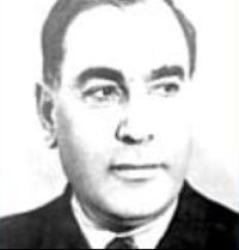
Sultan Ali Keshtmand
 Afghanistan
- Early Life and Political Involvement
- Political Career
- Later Political Roles
- Legacy
- Family and Personal Life
Early Life and Political Involvement
Sultan Ali Keshtmand was born on May 22, 1935, in Chahardeh, Kabul province, Afghanistan. His family was Shia Hazara, and his father was a shopkeeper. Keshtmand studied economics at Kabul University, graduating in 1961. During his studies, he joined the underground Karmal circle in 1960.
In January 1965, Keshtmand participated in the inaugural congress of the People's Democratic Party of Afghanistan (PDPA), where he was elected to the Central Committee. He was arrested later that year for organizing anti-government demonstrations and imprisoned for about a year.
Political Career
After his release, Keshtmand ran unsuccessfully for parliament in 1965 and 1969. He held various government positions, including director general of the economic department of the Ministry of Mines and Industries. Following the PDPA split, Keshtmand joined the Parcham faction.
After the party's reunification in 1977, Keshtmand became a member of the PDPA Politburo and the Commission for Theory, Agitation, and Propaganda.
Following the April 1978 revolution, Keshtmand was appointed Minister of Planning but was later removed and arrested on suspicion of conspiring against President Taraki. He was sentenced to death, but the sentence was commuted to life imprisonment at the urging of the Soviet government.
After the Soviet invasion of Afghanistan in 1979, Keshtmand was released and reinstated as a member of the PDPA Politburo. He became Deputy Prime Minister and Minister of Planning in 1980.
In June 1981, Keshtmand was appointed Prime Minister. He was also a member of the Defense Council and chaired the commission on maintaining communications.
Later Political Roles
Keshtmand resigned as Prime Minister in 1988. He became Secretary of the PDPA Central Committee from 1988 to 1990. After the PDPA was transformed into the Homeland Party in June 1990, Keshtmand became a member of the Executive Committee.
In April 1991, Keshtmand resigned from all positions. He left the Homeland Party in July 1991, stating that he was unwilling to "restructure."
Keshtmand was severely injured in an assassination attempt in February 1992. He retired from political life after the collapse of the Najibullah regime.
Legacy
Keshtmand defended the actions of the PDPA and the Soviet intervention in his three-volume memoir. He believed that the PDPA was a "freedom-loving and patriotic movement" that had done much for Afghanistan's working class.
Keshtmand also criticized the prolonged presence of Soviet troops in Afghanistan. He believed that the party had become bureaucratic and had lost its ideology.
Family and Personal Life
Keshtmand's wife, Karima, was a member of the PDPA and served as secretary of the Democratic Organization of Women of Afghanistan. His brothers, Hamid, Abdullah, and Asadullah, all received higher education abroad. His sister, Jamila, was the wife of Tahir Badakhshi, the leader of the Revolutionary Organization of Toilers of Afghanistan.