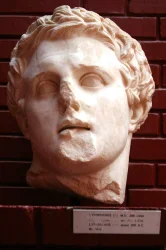
Suppiluliuma I
- A soldier rises to the throne
- Rebuilding Hittite power
- Treaties and international diplomacy
- The king in the historical record
- Legacy
Suppiluliuma I transformed the Hittite kingdom into one of the dominant powers of the ancient Near East. Through decades of campaigning and careful diplomacy, he expanded Hittite authority across Anatolia and northern Syria, challenging the kingdoms of Mitanni and Egypt. The surviving record, especially the annals written by his son, presents a ruler whose military success reshaped the balance of power across the region.
A soldier rises to the throne
Suppiluliuma ruled in the mid-fourteenth century BCE, though the precise dates remain debated. He was the son of King Tudhaliya II and had already gained military experience before becoming king. Ancient and modern accounts suggest that his accession followed a struggle within the royal family, in which he displaced the designated heir, Tudhaliya the Younger. The details are difficult to reconstruct, but his later campaigns helped consolidate his position.
Rebuilding Hittite power
At the start of his reign, the Hittite realm faced pressure from rival powers and rebellions among neighboring states. Suppiluliuma undertook major campaigns in Anatolia, recovering territories and reinforcing the kingdom’s authority. His efforts marked the beginning of a period often described as the Hittite Empire’s great-power phase.
He then turned toward northern Syria, where local kingdoms were tied to the Mitanni and Egyptian spheres of influence. By defeating Mitanni forces and bringing cities such as Aleppo and Carchemish under Hittite control, he extended his reach southward. Rather than relying only on conquest, he installed or recognized local rulers who owed him loyalty and bound them through written treaties.
Treaties and international diplomacy
The Hittite archive preserves treaties with rulers across Syria and Anatolia, including agreements with Shattiwaza of Mitanni and Aziru of Amurru. These documents set out obligations of loyalty and military support, making diplomacy a key part of the growing empire. They also reveal a sophisticated international system in which kings communicated as peers, while smaller states navigated the competing demands of larger powers.
Letters from the Amarna correspondence show Suppiluliuma addressing the Egyptian court in Akkadian, the diplomatic language of the age. One famous episode concerns a request from an Egyptian queen, a widow who asked him to send one of his sons as a husband. Suppiluliuma sent Prince Zannanza, but the prince died before reaching Egypt. The identities of the queen and the circumstances of the prince’s death remain debated, and the episode sharpened the tension between Hatti and Egypt.
The king in the historical record
Much of what is known about Suppiluliuma comes from “The Deeds of Suppiluliuma,” a narrative composed by his son Mursili II. It describes military campaigns and royal decisions from a Hittite perspective, celebrating the king’s achievements while also preserving valuable details about diplomacy and warfare. Letters and treaties from the royal archives add other perspectives, though the evidence remains incomplete.
Suppiluliuma died during a devastating plague that swept through the Hittite lands. The disease continued into the reign of Mursili II, who attributed it in prayers to the gods’ anger over earlier events, including the treatment of Egyptian prisoners. The precise cause and spread of the epidemic are uncertain, but it had a lasting impact on the kingdom.
Legacy
Suppiluliuma’s reign redrew the political map of the eastern Mediterranean and Near East. His victories weakened Mitanni, brought much of northern Syria into the Hittite orbit and established a network of vassal agreements that outlasted him. His son inherited both an expanded empire and a severe plague crisis, but the foundations of Hittite power laid by Suppiluliuma shaped regional politics for generations.