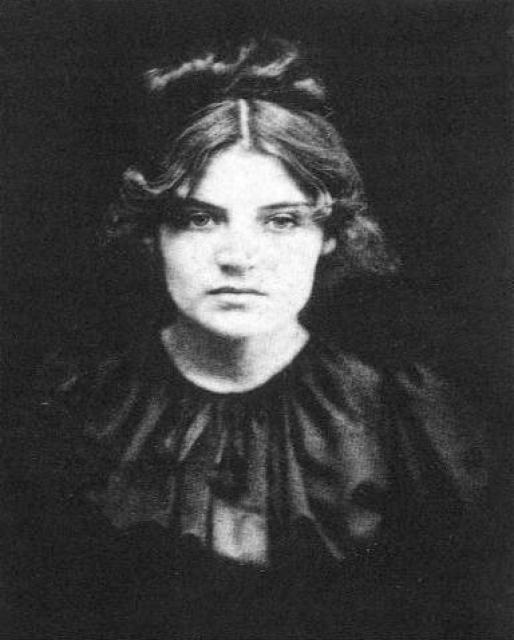
Suzanne Valadon
 France
Suzanne Valadon began in the Paris art world as a model, posing for some of the era’s best-known painters. She then turned the lessons she absorbed in their studios into a bold career of her own, making frank, psychologically alert portraits and nudes at a time when women artists were rarely given the same freedom to look and depict.
Childhood and Early Work
Born Marie-Clémentine Valadon on September 23, 1865, in Bessines-sur-Gartempe, Haute-Vienne, she was the daughter of Madeleine Valadon, an unmarried domestic worker. Her mother brought her to Montmartre, where the family lived with little money. Marie-Clémentine took on work while still young, including jobs as a seamstress, market worker, florist’s assistant, waitress, and nanny.
Around 1880, she briefly performed in a circus. A fall ended that work and helped direct her toward the studios and cafés of Montmartre. She became an artist’s model, first using the name Maria. She posed for painters including Pierre Puvis de Chavannes, Pierre-Auguste Renoir, Henri de Toulouse-Lautrec, and Jean-Jacques Henner. Toulouse-Lautrec later called her Suzanne, a name she adopted.
From Model to Artist
Valadon was not content to remain on the other side of the canvas. She studied how artists drew and painted while posing, and pursued her own drawing in parallel. Edgar Degas became an important friend and supporter: he encouraged her work, collected it, and taught her printmaking techniques, including soft-ground etching.
She signed an early pastel self-portrait in 1883, the same year she gave birth to her son, Maurice Utrillo, whose father was unknown. In 1892 she began painting on canvas. The following year she had a short, intense relationship with composer Erik Satie; she also made a portrait of him. Her friendship with Degas helped secure her place as a professional artist. In 1894 she showed drawings at the Salon de la Société Nationale des Beaux-Arts, an important public step for a woman without formal art-school training.
Valadon’s relationship with Miquel Utrillo, a Spanish artist and journalist she had met in Montmartre, was a defining part of her personal history. He legally acknowledged Maurice as his son in 1891. In 1896 she married banker Paul Mousis, but the marriage ended in divorce in 1911.
A Mature Career
Valadon devoted herself chiefly to painting from 1909. That year she exhibited Summer, also known as Adam and Eve, which depicts herself with her new partner, the painter André Utter. Its inclusion of a male nude painted by a woman made it a striking challenge to the conventions of the period. She and Utter married in 1914.
Her subjects included portraits, still lifes, landscapes, children, and the human body. She returned throughout her career to female nudes, portraying the body with directness rather than idealizing it for a presumed male viewer. Works such as The Blue Room (1923) show a modern woman at ease, clothed and self-possessed, while her depictions of nude women and men insist on the sitter’s physical presence rather than a polished fantasy.
She exhibited at the Salon des Indépendants and the Salon d’Automne, and showed work through the gallery of Berthe Weill, an influential champion of modern artists. In 1924 she joined the Salon d’Automne and signed a contract with the Bernheim-Jeune gallery. The French state acquired The Blue Room, a sign that her work had gained recognition during her lifetime. At the same time, she supported Maurice’s development as a painter, encouraging him to work after he began painting in adulthood.
Later Years and Legacy
Valadon continued exhibiting into her later years, including with the Société des Femmes Artistes Modernes, which she joined in 1933. She died in Paris on April 7, 1938, after a stroke. Her career left an extensive body of work—nearly 500 canvases and hundreds of drawings and prints.
For years, accounts of Valadon’s life often foregrounded her roles as model, mother, and companion to famous men. Museums and scholars have increasingly returned attention to the force and originality of the art itself. Her unidealized figures, confident line, and independent treatment of women’s bodies make her a distinctive voice in modern French painting and a consequential figure in the history of women artists.