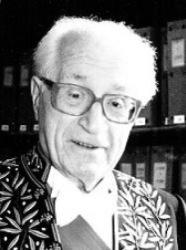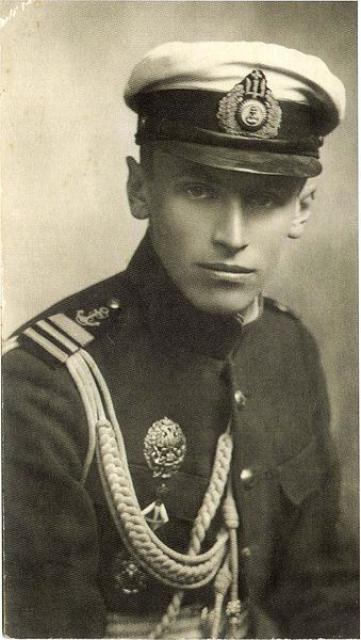
Svyatoslav Shramchenko
 USA
USABiography of Sviatoslav Shramchenko
Sviatoslav Shramchenko was a Ukrainian military and public figure, philatelist, and writer. He was born on May 3, 1893, in Baku. Shramchenko came from an ancient Cossack family in Chernihiv. His father, Alexander Shramchenko (1859-1921), was a graduate of Kyiv University and a cultural activist and ethnographer. Sviatoslav completed his gymnasium education in Kyiv and later studied at the Law Faculty in St. Petersburg. He then trained at the Gardemarine School and the Military and Legal Academy in Petrograd.
In 1917, he served as a midshipman in the Baltic Fleet. In January 1918, Sviatoslav moved to Kyiv, where he began working in the General Secretariat of Maritime Affairs. As a senior aide-de-camp, Shramchenko participated in the preparation of several laws regarding the Ukrainian state fleet. He was also the chairman of the interdepartmental heraldic commission at the Ministry of the Navy, responsible for creating Ukrainian national flags and developing naval symbolism.
In April 1918, Lieutenant S. Shramchenko arrived in Sevastopol. There, as a representative of the Minister of Maritime Affairs, he met with counter-admirals Mikhail Ostrogradsky, Nikolai Maximov, and other admirals and officers of the Black Sea Fleet to discuss the terms of the fleet's subordination to the Central Rada. On April 29, S. Shramchenko attended the ceremony of raising Ukrainian national flags on individual ships of the Black Sea Fleet. Upon his return to Kyiv, Sviatoslav Shramchenko was awarded the rank of lieutenant captain and became the head of the organizational department of the Ministry of Maritime Affairs.
On April 9, 1919, he was responsible for national economy in one of Simon Petliura's socialist governments. From April 24 to the end of May 1919, S. Shramchenko served as deputy minister, and in June 1919, he temporarily performed the duties of Minister of Maritime Affairs of the Ukrainian National Republic. On July 3, he was again appointed as the deputy minister. Sviatoslav Shramchenko played an active role in the formation of the Marine Infantry Division in Prykarpattia. Together with General-Horunzh Vladimir Savchenko-Belsky, he established the Gardemarine School in Kamianets-Podilskyi, where he served as an aide-de-camp (deputy director). Although he no longer held ministerial positions, he remained part of the government as one of the signatories of the appeal "From the Government of the UPR" proclaimed by Petliura when signing the declaration with the Poles on December 2, 1919, which transferred Galicia and Volhynia to Poland.
From May 19, 1920, to December 10, 1921, he headed the General Naval Staff, responsible for the organizational and tactical department of the Naval Command. However, until the end of his life, he always referred to himself as a lieutenant, occasionally as a lieutenant captain. After the internment of the Ukrainian army in Poland in 1920, S. Shramchenko ended up in a camp. However, his knowledge of several foreign languages allowed him to work as a secretary in the French mission in Poland. He held this position from 1921 to 1922. Eventually, S. Shramchenko settled in Czestochowa, where he led the Ukrainian community from 1924 to 1939. He worked as a naval historian and journalist, contributed to emigrant journals such as "Za derzhavnist," "Tabor," "Litopisi Chernoi Kalini," and others. He wrote over 200 works on military memoirs, written in different languages, including "Raising the Ukrainian Flag in the Black Sea Fleet," "Events in the Ukrainian Black Sea Fleet in 1918-1920," "Ukrainian Naval Schools in 1918-1920," "Law on the Ukrainian Fleet and Its Executors," and others. He is the author of studies and articles on the history of the Ukrainian Navy from 1917 to 1920 in the book "Histories of the Ukrainian Troops" (I. Tiktora Publishing, 1936 and 1953). In emigration, S. Shramchenko was the main initiator of the celebration "Day of the Ukrainian Sea."
During this time, he was also a freelance correspondent for the Ukrainian philatelic journal "Ukrainsky Filatelist" published in Vienna by I. Turin. From 1941 to 1944, he headed the Ukrainian Aid Committee in Helm (General Government), and from 1945 to 1950, the Ukrainian Aid Committee in Erfurt (Germany).
In 1950, Sviatoslav Shramchenko moved to Philadelphia, USA. There, he was offered a service in the American navy, but only if he had a good command of the English language. He was a member of the Ukrainian People's Union (UNP). He wrote a column on naval news in the newspaper "Svoboda" and authored several other articles in the same and other American newspapers.
Shramchenko was also involved in museum work in the Ukrainian diaspora. Specifically, he preserved the first flag of the Ukrainian Navy, which is now located in the Ukrainian National Museum in Chicago. He was married and had a son. His wife's name was Maria Alexandrovna, and his son's name was Rostyslav. Both his wife and son were members of the UNP, and his son was a student at the University of Philadelphia. According to official information, S. A. Shramchenko passed away on June 24, 1958, from a heart attack. He was buried in the cemetery of the Ukrainian Orthodox Cathedral of St. Andrew the First-Called in South Bound Brook, New Jersey. However, there is a conflicting posthumous mention of Sviatoslav Shramchenko, left by Ukrainian writer and emigrant Vladimir Belyaev. In his story "On the Neokrayany Wings...", he mistakenly (mixing up Shramchenko with someone else) notes that "former Senior Lieutenant of the UPR Navy Sviatoslav Shramchenko," among other invited guests, allegedly attended a gathering of Ukrainian intellectuals on January 19, 1959, dedicated to the meeting of writer Ivan Bagriany. S. Shramchenko is also known as a researcher of Ukrainian banknotes and postage stamps, a collector, and a philatelist. His collection included about 16,000 different state and non-state stamps of Ukraine.
His first article, "I Francobolli della Posta Campo dell'Uкraina nel 1920" ("Postage Stamps of Ukraine in 1920"), was published in 1923 in the Italian philatelic journal "La Rivista Filatelica d'Italia" in Genoa, in Italian. In the following year, he published his articles and research in nine European journals in German, English, French, Italian, Polish, and Russian. In 1925, the first Ukrainian-language philatelic journal "Ukrainsky Filatelist" was established in Vienna, and the Ukrainian cultural and linguistic journal "Trident" was founded in Paris, where Shramchenko's philatelic publications were also printed.
Shramchenko's articles were also published in the Austrian-German journal "Sammler-Woche" (Munich), the German "Illustriertes Briefmarken-Journal" (Leipzig), and "Deutsche Sammler-Zeitung" (published in Borna near Leipzig), the English "The West End Philatelist" (London), the Polish Warsaw journals "Nowy Filatelista," "Filatelista Polski," and "Filatelista," the Lviv journal "Kurier filatelistyczny" and "Echo Filatelistyczne" (Lodz), the Swiss "Schweizer Illustrierte Briefmarken-Zeitung" (Bern), the Moscow journal "Sovetsky Filatelist," to name a few. By 1939, Shramchenko had more than 100 publications in eight languages in 23 predominantly philatelic journals in 12 European and Asian countries, including Germany, Austria, Czechoslovakia, Italy, England, France, Poland, Spain, Switzerland, the Soviet Union, Yugoslavia, and China.
During his time in Germany (1948-1949), he published several small review articles about Ukrainian philately in Ukrainian cultural and educational newspapers such as "Chas," "Ukrainski Vesti," and "Nedelia," which were published in Germany, as well as in the journal "Nash Klych," published in Buenos Aires. He also continued to publish in philatelic journals such as the Ukrainian-language American journal "Filatelist" (which was published from 1951 to 1955) of the Union of Ukrainian Philatelists and Numismatists, the Swiss Franco-German-language "F. Kronenberg-Sommer: Fotostates," the London "The British Journal of the Russian Philately," the Philadelphia "Rosika" (Rossica), where he published identical articles in Russian and English.
Promoting and popularizing Ukrainian philately worldwide was considered an important mission in his life by S. Shramchenko. However, he believed that all means were justified to achieve this goal. Shramchenko tried to generate interest in Ukrainian postage stamps by periodically sharing intriguing speculations about "rarities." His articles often contained unverified claims. He successfully created various insinuations. Many philatelists were aware of this, but without the ability to verify many of his "discoveries," they either ignored him or viewed his articles with skepticism. Not wanting to accuse him of lying based only on doubts, most simply ignored him or approached his articles with skepticism.