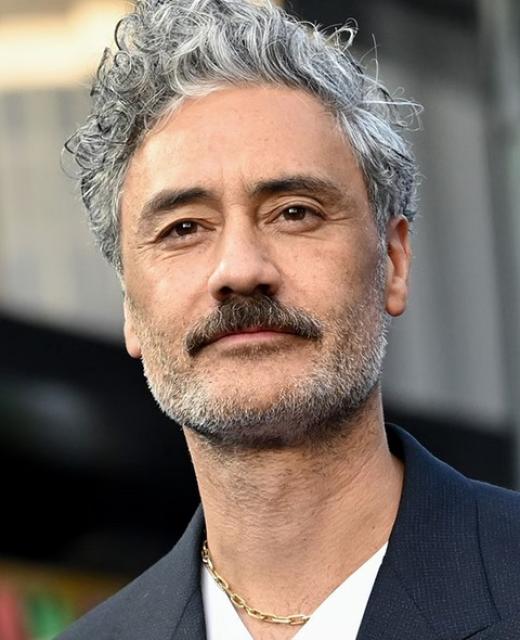
Taika Waititi
 New Zealand
- Māori roots, art, and comedy
- From short films to New Zealand hits
- Marvel, awards, and a wider stage
- Style and public image
Taika Waititi is a New Zealand filmmaker, actor, comedian, and screenwriter whose mischievous humor travels easily between intimate independent films and Hollywood blockbusters. His work often centers on children, outsiders, and unlikely families, mixing big comic turns with tenderness and a strong sense of place. He won the Academy Award for adapted screenplay for “Jojo Rabbit,” becoming the first Māori person to win an Oscar for writing.
Māori roots, art, and comedy
Waititi was born Taika David Cohen on August 16, 1975, in Raukokore, a small coastal settlement on New Zealand’s East Coast. His father was a Māori artist from Te Whānau-ā-Apanui, and his mother was a teacher of Jewish and European ancestry. He spent his childhood between Wellington and the East Coast, two very different settings that later became recurring sources of humor and atmosphere in his films.
He studied theatre and film at Victoria University of Wellington and began performing in comedy while still a student. With Jemaine Clement, he formed the comedy duo the Humourbeasts, which won New Zealand’s Billy T Award in 1999. Waititi also acted on screen and worked in visual art, developing a playful performance style that would later become part of his directorial signature.
From short films to New Zealand hits
Waititi first attracted international notice with “Two Cars, One Night,” a short film about children waiting in a rural pub car park. It earned him an Academy Award nomination for live-action short film in 2005. His feature debut, “Eagle vs Shark” (2007), introduced audiences to his offbeat romantic comedy style.
“Boy” (2010), set on the East Coast where Waititi had spent part of his childhood, brought a more personal tone. Waititi wrote, directed, and starred as an absent father returning to a small community, while the story follows the imaginative boy who has built him into a hero. The film became a major local success and established Waititi as one of New Zealand’s most distinctive filmmakers.
He followed with “What We Do in the Shadows” (2014), a mockumentary about vampire housemates that he co-directed and acted in alongside Clement. Its dry comedy and affectionate eye for ridiculous characters helped the film grow into a cult favorite and later a television series. “Hunt for the Wilderpeople” (2016), an adventure about a rebellious boy and his reluctant guardian, became another hit, pairing broad humor with emotional warmth.
Marvel, awards, and a wider stage
Waititi took his comic sensibility into the Marvel universe with “Thor: Ragnarok” (2017), a colorful reboot that revitalized the superhero franchise. He also voiced Korg, the gentle rock creature whose deadpan delivery became a fan favorite. Waititi returned to the role in “Thor: Love and Thunder” (2022).
His 2019 film “Jojo Rabbit” was a more audacious project: a satire about a German boy in Nazi Germany whose imaginary friend is Adolf Hitler, played by Waititi. The film won the Academy Award for adapted screenplay in 2020, as well as the BAFTA for adapted screenplay. The win brought him global recognition as a writer as well as a director, while continuing his use of comedy to expose cruelty and prejudice.
Waititi has also worked in television, including as a co-creator and executive producer of “Reservation Dogs,” a series centered on Indigenous teenagers in Oklahoma. Projects such as “Next Goal Wins” (2023) have kept his attention on unconventional teams and communities, with humor used as a way into stories about belonging and self-belief.
Style and public image
Waititi’s public persona is exuberant, irreverent, and deliberately relaxed, but his films often have a tender core. He likes oddball characters and absurd situations, yet his stories frequently ask who gets to belong, who is heard, and how children make sense of adults’ failures. His Māori heritage and experience growing up across rural and urban New Zealand have also informed his advocacy for Indigenous representation and his commitment to telling stories from perspectives often missing from mainstream screens.
Across independent comedies, superhero spectacles, and television, Waititi has built a recognizable voice without staying in one genre. His career has turned a distinctly local sensibility into an international calling card.