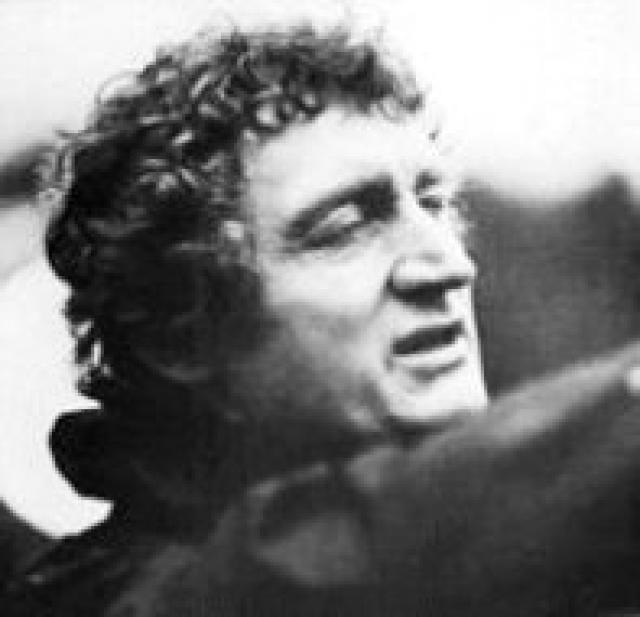
Walerian Borowczyk
 France
Walerian Borowczyk was a Polish-born filmmaker and visual artist whose work moved between experimental animation, live-action drama and erotic cinema. He began as a painter, lithographer and poster designer before becoming internationally known for animations made with Jan Lenica and, later, striking feature films that mixed surrealism, dark humor and precise visual design. He spent most of his career in France.
Early life and art
Borowczyk was born on September 2, 1923, in Kwilcz, Poland. He studied painting and graphic arts at the Academy of Fine Arts in Kraków, graduating in 1951. While still a student, he made amateur films and developed an interest in animation.
His early career encompassed several visual arts. He created satirical drawings and designed posters for theatre and film. In 1953, he received Poland’s National Prize for a series of lithographs. The training in composition, texture and printmaking that shaped his visual art also became central to his filmmaking.
Animation with Jan Lenica
In the mid-1950s, Borowczyk began collaborating with fellow artist Jan Lenica. Their short film Once Upon a Time (1957) and the later House (1958) helped transform Polish animation. Using cut-out images, photographs, found objects and economical movement, the films created worlds that were at once playful, unsettling and absurd. The collaborators treated animation as a medium for adult ideas and artistic experimentation, not only as entertainment for children.
Borowczyk continued making animated films after settling in Paris in 1959. Works such as Renaissance (1963) and The Games of the Angels (1964) showed how he could build a complete dramatic world from everyday objects, paper fragments and carefully controlled editing. He received international recognition, including the Max Ernst Prize for his contribution to animated film in 1967.
Live-action films
After moving to France, Borowczyk expanded from animation into live action. Goto, Island of Love (1968) established a distinctive cinematic world of authoritarian rule, strange rituals and antique objects. Blanche (1971), a medieval-set drama starring his wife, actress Ligia Branice, combined a painterly style with a tense story of forbidden desire and family power.
His later films brought him broader notoriety. Immoral Tales (1974) presented four period-set stories about sexuality, religious authority and transgression. The Beast (1975) fused erotic fantasy with the grotesque, while The Story of Sin (1975), made during a return to Poland, adapted a novel by Stefan Żeromski into a tragedy of desire and social convention. These works divided critics: some emphasized their visual intelligence and challenges to censorship, while others saw them as increasingly close to sexploitation.
In the 1980s, Borowczyk continued exploring literary and erotic material in films including The Strange Case of Dr. Jekyll and Miss Osbourne (1981). Although his work attracted strong critical interest in the 1960s and early 1970s, the reception of his later films was more mixed. He also returned briefly to animation with Scherzo Infernal (1984).
Other work and legacy
Borowczyk was also a writer, sculptor, photographer and designer of film sets. He published a collection of short stories, L’Anatomie du diable, and memoirs reflecting on his Polish years. His artistic life in France gave him room to move between media and film cultures while maintaining a highly individual style.
He died in France on February 3, 2006, at the age of 82. Borowczyk’s films remain influential for their handmade visual language and their willingness to blur the boundaries between animation and live action, comedy and horror, beauty and disturbance. His career is also a reminder of how daring work can provoke sharply divided responses, especially when it tests the line between artistic expression and exploitation.


