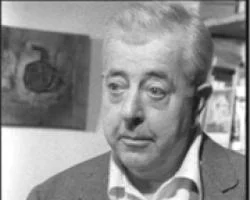
Teimuraz Babluani
- From Svaneti to film school
- A distinctive early film career
- The international breakthrough
- Later projects and personal life
Temur Babluani is a Georgian filmmaker whose work moves between stark social drama, poetic storytelling, and the country’s turbulent modern history. A director, screenwriter, actor, and occasional composer, he built a reputation through a small but distinctive body of films. His best-known feature, The Sun of the Sleepless, won the Silver Bear at the 1993 Berlin International Film Festival and remains one of the most celebrated Georgian films of its generation.
From Svaneti to film school
Babluani was born on March 20, 1948, in the mountain village of Choluri in Georgia’s Svaneti region. He later moved with his family to Tbilisi, where his early fascination with cinema developed. Before establishing himself as a filmmaker, he worked a variety of jobs, including as a driver, sailor, and construction worker.
His route into directing was not immediate. Babluani began studies in other fields before turning to cinema, and in 1979 he graduated from the directing faculty of the Shota Rustaveli Theatre Institute in Tbilisi. His teachers included the influential director Tengiz Abuladze and filmmaker Irakli Kvirikadze. That same year, Babluani joined the Georgia-Film studio as a director.
A distinctive early film career
Babluani’s first features established a gritty, observational style. He began making Migrating Sparrows in 1979, but production stretched over several years; he completed the film in 1986, and it reached international audiences later in the decade. Set largely aboard a train traveling through the Georgian countryside, the film uses the confined space of the carriage to bring strangers, tension, and social difference into close focus.
While that long production was underway, he made Brother, a taut drama that further established his skill at building atmosphere and moral pressure. Babluani also appeared as an actor in Georgian films, including Smile Boys and Earth, This Is Your Son, and played Murtalo in the television adaptation of Kukaracha. Working both in front of and behind the camera gave him an unusually hands-on understanding of performance and film storytelling.
The international breakthrough
The Sun of the Sleepless brought Babluani his widest recognition. Released in 1992, the film follows a doctor whose personal ideals collide with the compromises of life in Soviet and post-Soviet Georgia. Babluani wrote and directed it, and also composed its music. The film won the Silver Bear for outstanding artistic contribution at the 1993 Berlin festival, along with major festival honors in Georgia and Russia. It also earned two Nika awards and helped cement his reputation as one of Georgia’s leading directors.
The film’s achievement brought Babluani the Shota Rustaveli State Prize in 1995. Yet his output remained selective. Rather than producing a long run of commercial features, he returned to filmmaking at intervals, pursuing projects that often joined his roles as writer and director.
Later projects and personal life
In 2006, Babluani co-wrote and co-directed The Inheritance with his son Géla Babluani, who also became a filmmaker. The collaboration extended a family connection to cinema while bringing their perspectives together in a Georgian-French production. Babluani later turned to fiction as well: his first novel, The Sun, the Moon and the Wheat Field, appeared in 2018.
Known for working across film disciplines and for choosing projects carefully, Babluani has left a mark that reaches beyond the number of films he has made. His work carries the texture of Georgian life and history, while its internationally recognized centerpiece continues to introduce audiences to a distinctive voice in Georgian cinema.